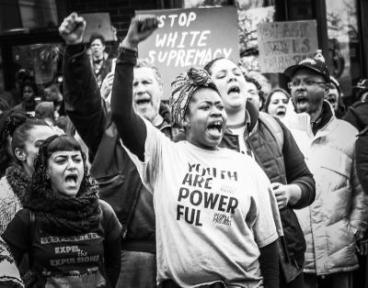
 A while back, I penned some thoughts about questions I had as it relates to issues of race and the church found here. I specifically directed my questions at those who feel like the cause of battling white supremacy takes such precedence that it becomes an overpowering force and actually defeats the purpose of reconciliation. I confess, I was a bit pointed and may even seemed to reject any lingering issues.
To be honest, I did not expect to be writing so much on this topic. I’ve been compelled to write because of concerns that I’ve had regarding the polarization of how issues of race were perceived in such disparate ways that increasingly, many in the church are decrying an urgency in addressing. I suspect that this is partially due to extended weariness and concern that things will never be right.
I want to wrap up some concluding thoughts as I don’t anticipate writing on this topic for awhile, as follows;
First know that I do not want to be dismissive of concerns, especially where legitimacy still exists. I am reminded on a regular basis that prejudices of all kinds still abound, not just on race. Sometimes it is in your face, like the alt-right gathering at Charlottesville. But certainly more subtle and subversive can create standards around acceptably that is centered in Anglo culture. Yes, implicit bias does exist whereby a deviation from the standard is deemed to be inferior and even unacceptable according to that norm as this survey highlighted by a New York Times article points out. Surely, this can happen in churches to varying degrees whereby minority perspectives are disregarded and/or dismissed. I personally know of cases where this has happened.
So I do not want to undermine the very real frustrations that people of color can experience in predominantly white environments, especially in our churches. Though I am still left to ask about the collective conscious of “white evangelicalism” that pervades the church such that people of color are harmed. I continue to see the cries for white evangelicals to disrobe their “whiteness” so minority Christians can feel safe and welcome. But what exactly are the expectations in this regard? What exactly is the extent of harm? Continue reading
 When it comes to the division between continuationism and cessationism (whether certain gifts still exist today), one of the common mischaracterizations that I have observed continuationists make against cessationists is that cessationists believe that miracles are no longer needed. While I do believe there are a small minority of cessationists who don’t believe in the existence of miracles, most would deny this charge and be open to the possibility that God can do whatever he wants to win people to himself.
 Well, it’s been a dozy of a week on social media. The allegations of sexual misconduct against Roy Moore continue to mount as does his adamant denial. Not only that, he has chalked it up as a grand political conspiracy, ‘it’s that other side.’ He will not back down. Now I can’t say for certainty these allegations are true though it is pretty hard to dismiss five separate stories. Given the seriousness of the charges, the thought of there being any truth to them gives me a chill regarding the lack of ownership. But I do recall another time a very prominent political figure was charged with inappropriate sexual behavior that initially met with the same response: “I did not have sex with that woman.” Of course we know how that story went. His adamant denials were dashed with the reality of truth. He was guilty.
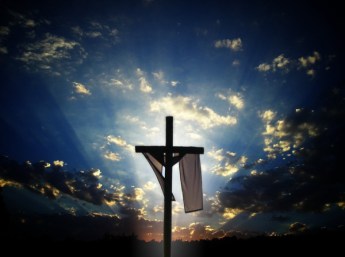 In these times of racial tension and political polarization that has engulfed the mood of the church, I increasingly noticed references to Jesus as belonging to a particular affiliation: white Jesus, black Jesus or American Jesus. Typically, it’s to repudiate a cultural appropriation of Jesus that aligns him with particular causes whether it be racial or political and to embrace a Jesus that can speak to our ethnic identity.
 TheoThoughts