 I don’t think any Christian would want the claim of an ideologue. But as I observed discourse in the past several years related to social and political engagement, unfortunately I do believe there is a place where this happens.
What is a Christian ideologue? According to Webster’s dictionary, an ideologue is “an often blindly partisan advocate or adherent of a particular ideology.” Another definition: an impractical idealist; theorist. So here is my working definition;
A Christian ideologue is one whose Christian faith is so entwined with a particular social or political paradigm that becomes the chief lens and expression of Christian faith and judges how life should be according to this lens. The Christian ideologue is drawn to earthly solutions and sees them as the vehicle for Christian solutions.
Now in fairness, I don’t think anyone who claims Christ as Savior and Lord, who submits to the authority of Scripture, and strives to live a faithful Christian life, signs up to be an ideologue. Rather, I see it as something happening over time, drip by drip, precept by precept, until a captivation has occurred. Continue reading
 I confess, I have a love-hate relationship with checking boxes. On one hand, it gives a sense of accomplishment as I find with the logistics of event planning I have to do for my job. And who doesn’t love checking off that fun item from their bucket list?
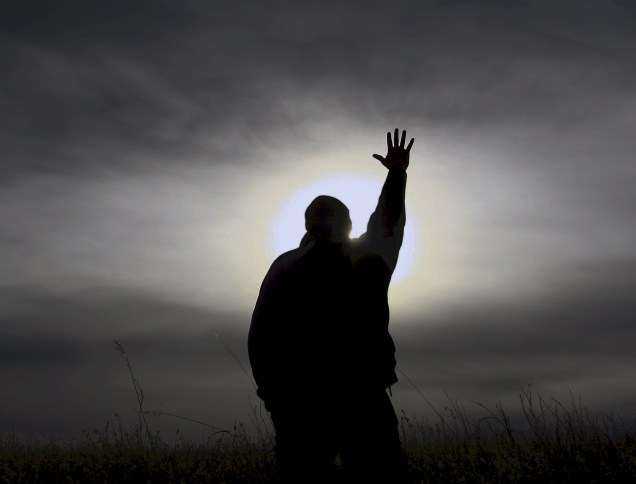 Despite my best intentions of keeping up with regular writings in this space, I have now come to the end of the year without posting anything since the beginning of the year. A few weeks ago, I had started on an end of year reflection and hope to have that out soon. But in the meantime, this quote struck me as something to seriously reflect on as we head towards a new year.
 Well it’s been several months since I’ve written but nothing like a controversial movie to draw me back to the keyboard. I initially had no interest in seeing it, Barbie the Movie. The thought of it just struck me as lame and trite. And seeing ladies going out in droves decked out in pick was even more of a turnoff, to be honest.
 There has been a lot of mention of freedom in recent years. There are those who tout the concept in relation to liberation of black people as if the shackles of slavery and Jim Crow still pull weight on the flourishing of black and brown people. They’ll speak of the persistent oppression that must be exorcised and prescribe remedies for this to happen: equitable policies, reparations, just policing, etc. They will conclude this is a freedom worth fighting for.
 TheoThoughts