 I’ve been working on a post on Rev. 13:16-18 and in doing some commentary diving, was struck by Greg Beale’s commentary on Rev. 13:11. The passage of Rev. 13:11-14 sets the backdrop of my next post and Beale’s poignant assessment of what this passage is saying;
And I saw another beast coming out of the earth; and he had two horns like a lamb, and he spoke as a dragon. And he exercises all the authority of the first beast in his presence. And he makes the earth and those who dwell in it to worship the first beast, whose fatal wound was healed. And he performs great signs, so that even he even makes fire come down out of heaven to the earth in the presence of men. And he deceives those who dwell on the earth because of the signs which it was given him to perform in the presence of the beast who, telling those who dwell on the earth to make an image to the beast who had the wound of the sword and has come to life.
As I indicated in my post on reading Revelation, it helps if we understand Revelation to be a series of visions that describe the goings on of what happens between the first and second Advent of Christ, these visions describe the reality of what occurs during that period particularly in relation to the opposition that comes against Christ’s church. In other words, it doesn’t help to see these visions transpire after the church is taken out of the way via a Rapture and isolated to a 7 year period, but rather describes happens from the tine of Christ’s ascencion until his return. As evidenced by the presence of the church, very much describes the onslaught of deception that eventually pits the mainstream culture against Christianity. (It also helps to see chapter 13 as a reflection of a larger series of visions beginning at 12:1). By way of observation in our culture, I have much to say about this, which I’ll get to in a bit, but I found this section from Beale compelling and sobering. Continue reading
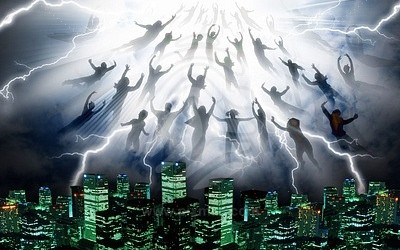 I’m continually mindful that we often read presuppositions into the biblical text especially when convinced of a particular position. I think it’s just natural to do that. My shifting views on eschatology that is causing me to re-examine portions of Scripture with fresh eyes continues to affirm this.
 I remember that day back in Spring of 2006 almost like it was yesterday. I was pacing in bedroom while reading Romans 4 and then that moment came. I stopped dead in my tracks reading 4:17, “He is our father in the sight of God, in whom he believed—the God who gives life to the dead and calls into being things that were not.” You see for many of my Christian years, I cited that phrase as if it is something we can do, calling those things that be not as though they were. It’s not like I didn’t read the Bible. I read it diligently. But I imposed the philosophy of “speaking things into existence” unto the text. Because it was so popularly taught in my circles, I sincerely believed that words contain power and we can use them to wield that God would move according to the words we spoke, as if our words had some kind of power over circumstances. So when reading Scripture, I brought that presupposition in to whatever I read (such as Mark 11:24).
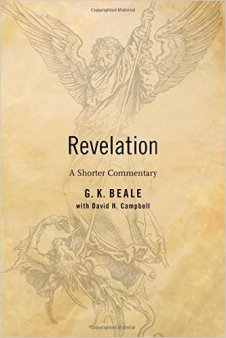 I just received this commentary in the mail having ordered it about a week ago. I normally wouldn’t write a post about how excited I am about my latest book purchase. But this one is a bit special because it fits with the particularly trajectory I’ve been on regarding how I understand the 66 books of the Bible fit together in terms of God’s outworking of his redemptive history.
 I have often thought that eschatology, the doctrine of the end times, gets treated as a tag-on to Christian theology. In other words, it is possible to treat how we view the end as something additional to what we would consider the primary basis of Christianity.
 TheoThoughts