 Despite my best intentions of keeping up with regular writings in this space, I have now come to the end of the year without posting anything since the beginning of the year. A few weeks ago, I had started on an end of year reflection and hope to have that out soon. But in the meantime, this quote struck me as something to seriously reflect on as we head towards a new year.
As I’ve finished up another chronological reading plan, naturally the year ends on the book of Revelation. I decided it would be good to read through Triumph of the Lamb by Dennis Johnson. I love how the commentary is written in a narrative style and is so doxologically rich. As I wrote here several years ago, my perspective on the book of Revelation has changed drastically. I no longer see it as a chronological rendering, where are events and times are literal telling of what will happen in a defined end period of time that includes a pre-tribulation rapture and seven year tribulation period. Rather, I see the rich symbolism pointing out cycles of activity and judgements, the forward movement of Christ’s church amid cosmic tensions, turmoil and outright opposition, and Jesus’ ultimate triumph to bring everything back to the right order as was intended from the beginning of Genesis.
Regardless of your interpretation, one thing should be crystal clear–Jesus is at the heart of it. He wins! This is after all “a revelation of Christ” given to John about God’s ultimate outworking of his creation. I’m actually coming to the conclusion that ending the year with this reading, regardless of the reading plan, is a worthy endeavor especially as I observe the landscape of our current culture and it’s pulls on the Christian faith in varying ways. Continue reading
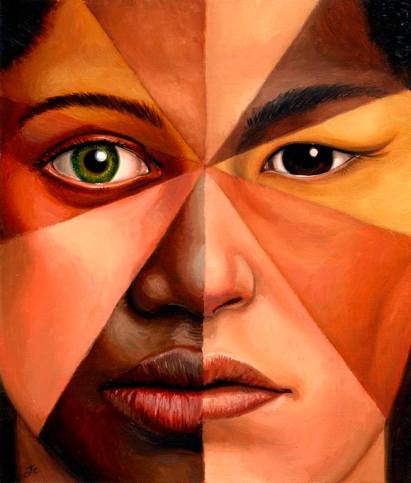 Recently, I’ve seen a couple of tweets that have caused me to reflect on how things will be in the New Heavens and New Earth. A while ago, I saw one tweet about black bodies retaining the same in the resurrected state. While I do believe this, it led me to think about how much race and ethnicity will matter in the new heavens and new earth. There is only so much we do know based on what is revealed in Scripture. So I’ll say from the outset that some of what I’m writing here is speculative in nature but bear with me.
 Recently, a friend from church was sharing about her episode with anaphylaxis shock. She was home alone with her infant when suddenly and without warning, her body started reacting to what, is unknown. She couldn’t make it to the phone to call her husband or mother-in-law and barely made it to the computer to type a message out. She was going in and out of consciousness and wondered if this was it, was she going to die. But instead of the cheery easiness with which we Christians tend to treat death, there was an easiness about it. Almost a fear, more like dread.
 As we Christians celebrate the bodily resurrection of our Lord, we loudly proclaim that he is risen. Now through much of my Christian life, I tended to translate that into merely a spiritual enterprise. Meaning, the resurrection signifies the forgiveness of sins and reconciliation to the Father, baptism into the kingdom of God and union with Christ. It is that transaction that raises us to new life in Christ (see Romans 6:5-11).
 If you’ve followed me for any period of time, you know that I abhor the prosperity gospel. As I wrote about
  TheoThoughts