 During Holy Week, I read a devotional centered around Judas’ betrayal of Jesus in John 13:21-32. The premise of the devotional was how much Jesus loved Judas, even though he knew he would betray him and he did. Here is a snippet that I think speaks to heart of the devotional;
It is one thing to consider what Jesus would do in our situations. It is quite another to put ourselves into his life situations. When we do this, we focus on Jesus and the contexts of his decisions, instead of our own. In John 13:26, Jesus is serving the person he had just identified as his betrayer. If we were in the presence of someone we knew had planned harm to us, could we do the same? Jesus served Judas, literally and figuratively, without resentment or any effort to “get even.” Now that is love.
Our brokenness can cause us to struggle with showing love. We could feel and behave as if an “other” was a personified WMD (weapon of mass destruction) aimed at us, making us feel MAD (mutually assured destruction) in response. But we do not have to wonder WWJD. We know what Jesus did. We have his road map. Yet, his path for us may still cause us some internal struggle. We need not, even as good Christians, ignore that struggle. It is part of the process. Even Jesus was “greatly distressed in spirit, and testified, ‘I tell you the solemn truth, one of you will betray me’” (John 13:21). However, his love was greater.
Now I gleaned from the gist of the devotional that Jesus is showing us how to love our enemies. However, I found this angle a bit short sighted. Yes, Jesus did demonstrate love for Judas and overlooked the offense. But to leave it at that kind of misses the point of what was transpiring. Jesus saw Judas. He saw the betrayal. He turned the other cheek. Why? Because he saw more than Judas. He saw us. He was set to offer himself over as a sacrificial lamb to redeem those whom the Father called into his kingdom. There was something more at stake than dealing with Judas but to be the deal for mankind so that we could know the Father and reflect his glory. Continue reading
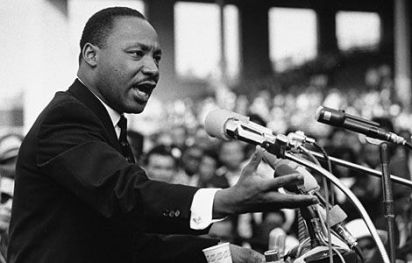 Thanks to the memory section on Facebook, an article written by Dr. Anthony Bradley popped up from two years that I shared titled
  One of the essays in my application to Dallas Theological Seminary required that I respond to the question of how I knew I was called into ministry. While I understood that question to be more related to affirming events that led me to apply to seminary, I find that the idea of being called into ministry has not only been a popular catch phrase but also bears some examination. I say this because I believe the call to ministry has been designated as a special call to select individuals based on God’s selection for specific ministry roles. I do believe that has some merit as I indicate below, but I think it might be different than what is commonly thought of as a call.
 As I’ve watched the events unfold these past few days with Pope Francis’ visit to the U.S., I’ve watched another set of events unfold – Protestants. Angry Protestants. Protesting Protestants. Protestants that pepper the interwebs with angry rants about the evils of Catholicism and the falsehood of the pope celebrated as the head of the church (which actually he would say Christ is the head of the church as would any knowledgeable Catholic). Nonetheless, I’ve been somewhat amused at the “hit job” that has emerged from a simple visit as if the Pope is seeking to take over the United States and must be silenced.
 I stood on a stage in June 2013. Well, it was more like a platform where they pulpit resides. I stood with several other people in front of the congregation. We were reciting vows. No, not saying “I do” in matrimony but definitely making a commitment to the local church. We professed faith in Jesus Christ. We agreed to be involved in the life of the church. And, wait for it…we agreed to be submitted to it’s leadership and including, should the need arise, agreeing to church discipline.
 TheoThoughts