 In these times of racial tension and political polarization that has engulfed the mood of the church, I increasingly noticed references to Jesus as belonging to a particular affiliation: white Jesus, black Jesus or American Jesus. Typically, it’s to repudiate a cultural appropriation of Jesus that aligns him with particular causes whether it be racial or political and to embrace a Jesus that can speak to our ethnic identity.
Now, I get that cultural captivity is deserving of critique. I understand that when people use these terms it’s more of an indictment of cultural and political impositions on the work and person of Christ that has reduced him to a god of ideological fulfillment. I do think that legitimate frustration is warranted when Jesus is made into the likeness of particular interests.
However, the problem with repudiating these myopic tendencies with an adjectival Jesus does nothing to really mitigate the problem of a marginalized Jesus. In fact, I think it reduces him further and makes him too small.
There is only one Jesus
There is only one Jesus in whom and through whom creation was made and to whom it all points. He was with God and is God (John 1:1-4; Col 1:15-18)
There is only one Jesus who responded to the Father’s will to call creatures to himself so that God will be their God and they will be his people. (Ex. 7:6; John 10:14-16)
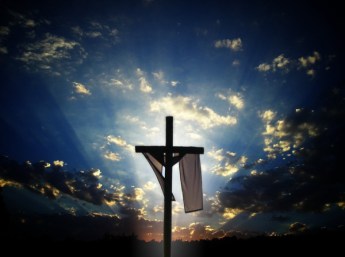
There is only one Jesus who voluntarily left his heavenly abode, became fully human like us to become the obedient sacrifice for us so that all who trust in him would live. This one Jesus removed the most powerful stain of sin on humanity by bearing it on a cross and gives life through his resurrection. (Phil 2:6-8; Col 2:13-15)
There is only one Jesus who said, “Come unto to me all who are weary and burdened and I will give you rest.” And this rest served as the backbone of survival for too many years, through too many tears of injustice and marginalization. This one Jesus offers hope to the hopeless through trials and pains of this life (Matt. 11:28; Heb. 10:32-35)
There is only one Jesus who is building his church according to the will of the Father that comprises every tongue, tribe and nation, has progressed under his sovereign rule and will continue to forge ahead across the globe. This one Jesus unites his people through his reconciling work by breaking down the walls of division that ethnic hostilities have erected (Eph. 2:13-16; Rev 7:9)
There is only one Jesus who can transform cold and prejudicial hearts and transplant the desire to love even our enemies if we are truly united to him. (John 13:24-35; Phil. 2:13)
There is only one Jesus who not only made the world but overcomes it and promises to one day come and make it right again. He is the anchor in which any reconciliation can be found. (John 16:33)
This one Jesus is bigger than our ethnic alignments and political affiliations. He is bigger than our racial infractions and divides. His work is grander than any scheme concocted to subjugate, malign, segregate despite man’s pitiful efforts to shrink him down to size of our myopic visions.
So instead of pointing to a white Jesus or black Jesus or American Jesus or any other special interest Jesus, let’s point to the one Jesus who has the power and authority to help us out of our tribal mess.
 This post is not for everyone, though I suspect at some points or another in our Christian life it will resonate with just about everyone. But for now, if you feel like life is going pretty smoothly, your prayers have been answered, your heart is full and you otherwise are experiencing a relatively satisfactory life, you might want to sit this one out.
 Yes, you heard that right, my white church. Why not just the church? In fact, I bet the title alone will set up some keen anticipation for me to address everything that’s wrong with the white church and how it’s whiteness is harming people of color, how silent the white church is on issues of social justice and generally are wielding it’s power of white supremacy against the health of the church. Sure, there will be some that will roll their eyes, shake their heads and wonder why people keep being divisive with race labels and such. But I’ll get to you later.
 Recently, a friend from church was sharing about her episode with anaphylaxis shock. She was home alone with her infant when suddenly and without warning, her body started reacting to what, is unknown. She couldn’t make it to the phone to call her husband or mother-in-law and barely made it to the computer to type a message out. She was going in and out of consciousness and wondered if this was it, was she going to die. But instead of the cheery easiness with which we Christians tend to treat death, there was an easiness about it. Almost a fear, more like dread.
 As we Christians celebrate the bodily resurrection of our Lord, we loudly proclaim that he is risen. Now through much of my Christian life, I tended to translate that into merely a spiritual enterprise. Meaning, the resurrection signifies the forgiveness of sins and reconciliation to the Father, baptism into the kingdom of God and union with Christ. It is that transaction that raises us to new life in Christ (see Romans 6:5-11).
 TheoThoughts