Then call me a Leftist

This is a rare post in which I share a glimpse of my political orientation. So here it is–I am a right leaning independent voter. Why right? Because I am in favor of lesser government control and inclined towards individual freedoms. I support capitalism as long as its done ethically and believe that businesses should be given every opportunity to thrive in order to fuel the economy. There are other positions as well but I think you get the idea.

At one point, I seriously considered just signing my name to the Republican party. But then the 2016 election happened and decided being an independent was more favorable to my conscience. I won’t go further into that.

While I am not on board with MAGA, I still consider myself a conservative. In the podcast I formerly co-hosted, I shared why my Christianity oriented me in this direction. You can listen to this episode and hear more about that.

But when it comes to the issue of immigration and refugee resettlement, some would call me a Leftist, especially those strongly committed to the MAGA agenda or otherwise strongly partisan all-or-nothing right wing agendas. Continue reading

Rise of the Christian Ideologue

I don’t think any Christian would want the claim of an ideologue. But as I observed discourse in the past several years related to social and political engagement, unfortunately I do believe there is a place where this happens.

What is a Christian ideologue? According to Webster’s dictionary, an ideologue is “an often blindly partisan advocate or adherent of a particular ideology.” Another definition: an impractical idealist; theorist. So here is my working definition;

A Christian ideologue is one whose Christian faith is so entwined with a particular social or political paradigm that becomes the chief lens and expression of Christian faith and judges how life should be according to this lens. The Christian ideologue is drawn to earthly solutions and sees them as the vehicle for Christian solutions. 

Now in fairness, I don’t think anyone who claims Christ as Savior and Lord, who submits to the authority of Scripture, and strives to live a faithful Christian life, signs up to be an ideologue. Rather, I see it as something happening over time, drip by drip, precept by precept, until a captivation has occurred. Continue reading

At the end of the day, Christianity trumps white evangelicalism

Over at the Washington Post, Eugene Scott has written an interesting opinion piece regarding Mike Pence’s commencement speech at Liberty University. Scott is concerned that warnings about Christian persecution fall into a victim complex that is not all that helpful for navigating through fruitful citizenship. Now, I do agree with some of what he says. But the more I read through it, the more I think some parsing is in order to get to the real concern. He says;

Religious persecution is real. The congregations of three black Louisiana churches that were recently burned down for reasons that some suspect were racially motivated know this. And so do the congregants of the synagogue that was attacked last month by a gunman; the suspect pointed to his conservative evangelical theology as justification for his hatred of racial minorities.

But accusing “Hollywood liberals,” the media and “the secular left” of persecuting Trump-supporting evangelicals might do little, if anything, to prepare the next generation of leaders to be good citizens working toward the common good in a religiously diverse nation. At worst, it could perpetuate the victim mentality that is so pervasive in our culture wars and that some believe has made this country more politically divided than at any other point in recent history. Such a framing may win you some political battles, but in the long term, it makes it much more difficult for the United States to become “one nation under God,” as Pence and so many others often pledge.

Now, I do think he’s right in that we can form a persecution complex and engage in fear mongering. After all, Jesus did say that we would have trouble in this world. We can’t surely expect that a secular culture will align with Christian values. Even though religious liberty was ensconced in the framework of this country’s founding, we do need to consider it is also not a guarantee to live out faithful Christianity. That’s not to say we should not care or make efforts to preserve it. But we can at least expect a Christianity believed and lived faithfully will be at odds with a culture that seeks to live for self. Continue reading

On conservatives and race: do black lives really matter to the right?

black-lives-matter-super-169In my last post, I addressed an issue of priorities that drives politically conservative Christians to not only be drawn to the GOP but also feel compelled to endorse it’s candidate to uphold priorities. Specifically, I noted issues of life and traditional values and expressed the following.

These concerns are quite legitimate. We care about the rights of the unborn. And we care about the liberties granted us under the founding principles of this nation, that are to ensure freedom of worship. And so the typical response at elections is who will align with these values.

I confess that I had a particular audience in mind when penning that post, those who insist that the GOP platform is the most compatible with Christian values regardless of who their spokesperson is. For this crowd, these are concerns that are most directly linked to issues of life and morality. It is not lost on me that these priorities draw the conclusion that other concerns Christians care about don’t matter. These would be issues that have been under the lens, particularly with with the emergence of Black Lives Matter–issues of racism, policing, criminal justice, education, and poverty. These are issues of life and morality as well, which weigh heavier on people of color. For this reason, a major criticism of the right, and primarily Republicans, is that there is a disinterest and disregard for the concerns of minorities. Some will even label the Republican Party racist.

I do think there is some validity to this criticism. The elevation of abortion, religious freedom, and same-sex marriage has been a traditional platform of the Christian Right, made prominent in the 1980s with the so-called moral majority. Let’s be honest about who this movement represented: white Protestant America. Continue reading

About that time Peter demanded his religious freedom

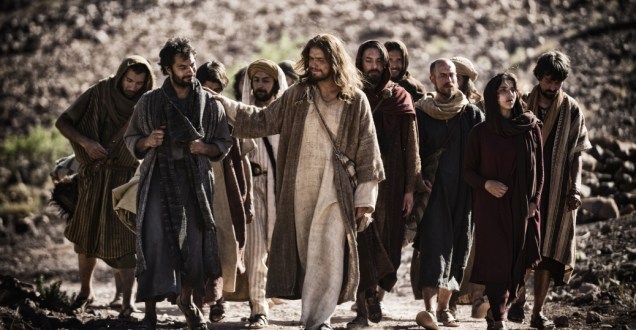
jesus-and-disciplesIn what has been one of the most bizarre, sleaziest election season, it goes without saying that the choice for Bible adhering, gospel-centered Christians has been quite challenging. Typically motivated by issues of life and religious freedom, it makes perfect sense to me that there is a natural compatibility of Christians towards conservatism and are either fully entrenched in the GOP or as independents, like myself, lean right and want to uphold these values. We who naturally gravitate towards the GOP naturally want to ensure that one who supports our values will occupy the highest seat of the nation. Not that the executive branch acts alone (why we have a checks and balance system), but there is a certain orientation towards issues that we typically expect.

These concerns are quite legitimate. We care about the rights of the unborn. And we care about the liberties granted us under the founding principles of this nation, that are to ensure freedom of worship. And so the typical response at elections is who will align with these values.

But there’s just one problem. The candidate of choice in 2016 has created an ethical dilemma.

Nonetheless, someone has to occupy the Oval Office. And so many evangelicals have convinced themselves that the issues of religious freedom, right to life and same-sex marriage are far too important to concede to the likes of Hillary Clinton. After all, she would only continue the legacy of Obama with it’s same-sex agenda, government coercion whose ideology goes directly against the grain of the principles upon which America was founded.

And so as conservative evangelicals clamor to justify a vote for Trump, despite the fact that his character maligns every ounce of morality that Christianity represents, the argument goes – but our religious freedom, the Supreme Court, traditional values. We need to live as Christians, after all. And living as Christians in this great nation means we should not have to bow to the heathen regime of Alinky-esque rulers who strive to squash our position.

It’s like this is the most important thing. Continue reading