Genesis 8:22 has served as a foundational verse for prosperity teaching with the philosophy of seedtime and harvest.
As long as earth endures,
seedtime and harvest,
cold and heat,
summer and winter,
day and night,
will never cease
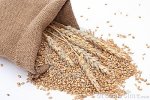 The idea is that our Christian life is about sowing seed to reap a harvest. So financial giving then becomes the indicator of our faith to make this happen. An entire theology and numerous ministries have been built on this one verse. If you don’t believe me, do a Google search. Now the promoters of seedtime harvest ministries will say that it’s biblical. But it is an egregious distortion of the Biblical text and the Christian faith.
1) The context: Putting this verse in it’s context shows that this prosperity philosophy has nothing to do with sowing or reaping. In fact, it has nothing to do with our activity at all. The entire chapter is about God remembering Noah and his family. Then he gives a promise to Noah after the flood that he would no longer destroy all living creatures as he had done in the flood (vs 21). Seedtime and harvest is another way of saying seasons and the verse as well as the entire chapter is telling of God’s control over them. In other words, the passage is saying that the earth will always experience seasons. It has nothing to do with Noah’s activity but God’s promise.
2) The canon: It is also significant to note that Genesis is a narrative. It’s telling of what happened as God progressively revealed himself to humanity. We have to examine any verse or passage according to the whole: the whole of what is going on in the OT and how that relates to the NT. To say that seedtime and harvest is central to what is being played out imposes something on the biblical narrative that isn’t there. But in context of God’s covenant promises to Abraham, his selection of a gathered people as a light to the nations, his provision for how these people would worship him through priestly activity, his rulership over them through selected kings and words spoken to them by the prophets, being ‘biblical’ points to this activity.
3) The Christ: All of this OT foreshadowed Christ. As God made promises and provisions, it was telling of the Messiah who would come and fulfill God’s promises made to Abraham (Genesis 12:1-3; Galatians 3:16). He is the one who perfectly fulfilled God’s requirements for perfection (Matthew 5:17; Romans 8:1-4) by fulfilling the offices of prophet, priest and king foreshadowed in the OT. The book of Hebrews sums this up nicely. During his earthly ministry, his mentioning of seed and harvest were related to those who would put saving faith in him because it was an agrarian society and that’s what they could relate to. He is the central theme of scripture. Our sowing and reaping for blessings is not the central theme of Scripture. Seedtime and harvest puts a corrupt twist on Christian teaching and robs it of its central theme, which is what God does through his Son for fulfillment of promises.
The sad reality is that the seedtime and harvest promoters have pretty much ignored the biblical context, the passages placement in the canon and the centrality of Christ. But this is the underpinnings of prosperity teaching that has spread like wildfire. It does go to what I said in my last post of the kinds of teachers that Paul was addressing in his letter to Timothy. It was those who would distort the meaning of OT activity and infuse speculations and novelty into the Christian faith.
Why does it matter? It matters because how we read the text is how we think about God. And how we think about him will motivate how we approach him. Seedtime and harvest is guaranteed to approach him in a way not befitting of his holiness.
 Well, this is kind of a cap off post from this week’s activities and final thoughts on Shai Linne’s Fal$e Teacher$. If you don’t know about it, Shai is a Christian hip hop artist who is unashamedly Reformed. He blasted what has been labeled prosperity teaching (though there is actually a mix of positions represented) in this single cut from his album, which was released April 9, 2013. I wrote a couple of articles over at Parchment and Pen here.
 Today was a bit of a milestone and one that I’ve looked forward to for quite some time. I registered for my final semester of seminary, or at least the ThM program (meaning there may be a possibility for the PhD program). Well, I still have to complete everything: this semester, thesis and the remaining 5 classes that will be taken this coming summer and fall. But it signifies that the end of something is near and the transition to a new chapter is on the horizon.

 TheoThoughts