 I’ve been working on a post on Rev. 13:16-18 and in doing some commentary diving, was struck by Greg Beale’s commentary on Rev. 13:11. The passage of Rev. 13:11-14 sets the backdrop of my next post and Beale’s poignant assessment of what this passage is saying;
And I saw another beast coming out of the earth; and he had two horns like a lamb, and he spoke as a dragon. And he exercises all the authority of the first beast in his presence. And he makes the earth and those who dwell in it to worship the first beast, whose fatal wound was healed. And he performs great signs, so that even he even makes fire come down out of heaven to the earth in the presence of men. And he deceives those who dwell on the earth because of the signs which it was given him to perform in the presence of the beast who, telling those who dwell on the earth to make an image to the beast who had the wound of the sword and has come to life.
As I indicated in my post on reading Revelation, it helps if we understand Revelation to be a series of visions that describe the goings on of what happens between the first and second Advent of Christ, these visions describe the reality of what occurs during that period particularly in relation to the opposition that comes against Christ’s church. In other words, it doesn’t help to see these visions transpire after the church is taken out of the way via a Rapture and isolated to a 7 year period, but rather describes happens from the tine of Christ’s ascencion until his return. As evidenced by the presence of the church, very much describes the onslaught of deception that eventually pits the mainstream culture against Christianity. (It also helps to see chapter 13 as a reflection of a larger series of visions beginning at 12:1). By way of observation in our culture, I have much to say about this, which I’ll get to in a bit, but I found this section from Beale compelling and sobering. Continue reading
 I actually started drafting this post some time ago, like a few months ago. When I first started the draft, it was a really tough post for me to write because it involves some issues that are near and dear to me. And tough because it involves people with whom I am united in the bonds of Christ and with whom I find myself increasingly coming into stark disagreement. It’s tough because I know these thoughts, which have been stewing for some time, might cast me and Christians who think like me, in a negative light.
 In my earlier Christian years, I was taught to hate the world and to avoid participation in it, especially as it related to culture. That means it’s products – music, books, movies, etc. I recall at times being torn because in the early eighties, music video was really taking off and I did like movies. Well, some movies were ok as long as there was no sex, drugs, violence or bad language (God forbid there would be a curse word!). The proof-text that was always used was 1 John 2:15 – “Do not love the world nor the things in the world. If anyone loves the world, the love of the Father is not in him.” That seemed pretty simple. That meant Christian movies with distinct Christian themes, Christian music, and Christian literature was acceptable. This is sacred and worldly things are secular. And Christians did not participate in worldly things, lest they love the world.
 Imagine that you are enjoying a delicious ice cream cone on a hot summer day. There’s something soothing about the frigid, creaminess that alleviates the scorch of the sun. Now imagine that someone comes and tells you everything that’s wrong with the deliciousness that you are enjoying or even goes so far as to knock that cone of goodness out of your hand. If you are like me, you would not take very kindly to that gesture, especially for something that was giving you such relief and comfort. You would feel violated in a way.
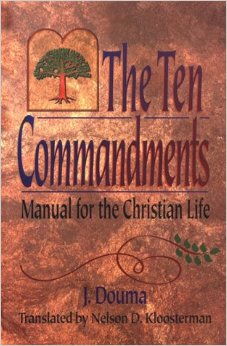 I’ve been reading through this excellent book that was recommended to me by a friend in a conversation in which I described my change of heart about the Ten Commandments. Yes, I confess, for many years I did not believe that the Ten Commandment applied to Christians since Jesus fulfilled the law. I shudder at that thought now since the Decalogue, aka the Ten Commandments, represents God’s ethical requirements for his people. Surely God does not have a different standard in the OT than in the NT, but brought to their fullness in Christ. Jesus demonstrated that this was summed up in the greatest command: to love the Lord with your heart, soul and mind and love neighbor as yourself. More of that, and my conversion to see this light, in a separate post.
 TheoThoughts