 I’m not really a task oriented person and shun the standard listicles of how you can have a better life. Our world today gravitates towards simplified pragmatism for improvement and living a Christian life is no exception.
However, I might just break that disposition . . . maybe. There is one principle I’ve learned in all my years of Christian living. It’s the one thing that successes and failures and trials and disappointments and uncertainty and bad church experiences have brought me to time and time again. What is this one principle, you ask?
Get over yourself.
Yep, that’s it. Everything rests on that. Yes, but what accepting Jesus? Well, it starts with that. First, I had to get over myself to even be a Christian. It’s when you realize there is no way that any goodness on your part makes you acceptable to the Father, that your best efforts fall way short and it is only through faith in Christ. It means wholeheartedly accepting his life, death and resurrection and what that means.
Then, I had to try to understand who this God is. Though I spent some years following all kinds of distorted roads, over time, I came to realize that he spoke to us through his written word that testifies to the Incarnate word through whom we come to God in the first place. I came across hard passages, stories that made me cringe, divine actions that made me question, and I ask questions. Lots of questions.
However, in all my years of Bible reading, I’ve recognized the importance of getting over myself. Because you see, I could read hard things, troubling things and then set myself up as judge and jury over God’s actions to determine what I would find acceptable or not. I could shape my own version of Christianity based on my level of comfort and acceptability. But that would make me full of myself. Continue reading
 I’ve had some swirling thoughts today that I wanted to spit out in reflection on Pentecost Sunday. If you’ve read my About page, you’ll know that I’ve gone through quite a theological transformation. My Christian life began with prosperity oriented, Word of Faith, Pentecostal based teaching. I read the Bible in a very fragmented fashion that led to all kinds of erroneous beliefs about Christian faith and practice. I then went through a dispensational/baptistic phase because I started reading the Bible in a more holistic manner and came to recognize the connectedness in Scripture. That evolved in a solidly Reformed position.
 I remember that day back in Spring of 2006 almost like it was yesterday. I was pacing in bedroom while reading Romans 4 and then that moment came. I stopped dead in my tracks reading 4:17, “He is our father in the sight of God, in whom he believed—the God who gives life to the dead and calls into being things that were not.” You see for many of my Christian years, I cited that phrase as if it is something we can do, calling those things that be not as though they were. It’s not like I didn’t read the Bible. I read it diligently. But I imposed the philosophy of “speaking things into existence” unto the text. Because it was so popularly taught in my circles, I sincerely believed that words contain power and we can use them to wield that God would move according to the words we spoke, as if our words had some kind of power over circumstances. So when reading Scripture, I brought that presupposition in to whatever I read (such as Mark 11:24).
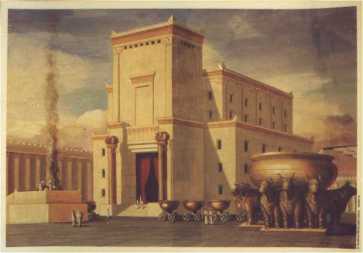 I can’t harp enough on how important it is to understand the relationship of the Old Testament to the New Testament. When we don’t make proper connections, this impacts how we understand the events of the Old Testament apply to us. In a way, I suppose this post is a follow up to
  As I’ve watched the events unfold these past few days with Pope Francis’ visit to the U.S., I’ve watched another set of events unfold – Protestants. Angry Protestants. Protesting Protestants. Protestants that pepper the interwebs with angry rants about the evils of Catholicism and the falsehood of the pope celebrated as the head of the church (which actually he would say Christ is the head of the church as would any knowledgeable Catholic). Nonetheless, I’ve been somewhat amused at the “hit job” that has emerged from a simple visit as if the Pope is seeking to take over the United States and must be silenced.
 TheoThoughts