I came across this older blog post by Trevin Wax, Dear Pastor, Please Exegete Your Church. In it he discusses the importance for pastors to evaluate what is going on in the lives congregants.
Sermon preparation does not end with good exegesis of the Bible; it always includes good exegesis of the local congregation. The preacher who can parse Greek verbs must also be able to discern the imperatives and indicatives his own people are living by.
Great preachers not only know how to preach a particular text; they know how to preach a particular text to a particular people.
And that brings us to the practical side of sermon preparation. In order to faithfully exegete our church, we must know our people. The church is not a preaching station where individual Christians show up once a week to hear great oratory. The church is a community of believers who live together under the lordship of Christ. The preacher’s role in this community is to know the Scriptures and his people well enough to discern (through the power of the Holy Spirit) how best to exhort them faithfully and biblically.
If our enthusiasm for ”good preaching” keeps us constantly isolated from our congregation in sermon preparation, we might be shortchanging God’s people. If we are to preach effectively, we must spend time with our people, understanding how best to use the Word to train them, rebuke them, correct them, and comfort them.
Biblical exegesis and church exegesis go hand in hand.
Whenever we study the text, the faces of our people who need a word from God should be leaping from the pages.
Yesterday, during a conversation with one of my classmates who is a pastor, we talked about what it meant to pastor. We talked about how pastoring is messy work because it involves being involved in the lives of people. Public speaking is not pastoring.
The church is not a preaching station where individual Christians show up once a week to hear great oratory. The church is a community of believers who live together under the lordship of Christ. – Trevin Wax

So it naturally leads me to ask a logical question that I’ve mulled over in my mind for some time regarding very large churches. How can the ‘pastor’ who stands in front of thousands of people but not involved in any of their lives be called a pastor? Maybe that’s a bit too simplistic considering there is biblical evidence for appointment of others (elders/deacons). I also don’t want to caste dispersions on good preaching. Just because it’s large, doesn’t mean the preaching is bad or dishonest to Scripture (though we can cite hands down the ones who are). But in our culture of mega-churches and celebrity pastors, I think it is important to make a distinction since we tend to call preachers who orate in front of others ‘pastors’.
There’s also the illegitimate use of bishops that run rampant too. Thabiti Anyabwile addresses that here.
Would love to hear your thoughts.
 If you’ve seen the State Farm Insurance commercial, you’ll probably recognize that I’m leveraging their little jingle about a topic I’ve been reflecting on over a conversation I had recently with a lady at my church. She heads an outreach ministry that we do with a local elementary school. Basically, she coordinates donations and other needs that teachers and/or students have. The thrust of the ministry is to be a good neighbor.
 While I have categorized my position on gender roles as complementarian, I have wrestled with some ways in which it has been defined. One of my primary issues involves the distinctive roles between men and women, that I consider to be exaggerated or forced. Not only does this create more restrictions than I think is warranted in Scripture, but promotes some less than healthy attitudes. We can’t just look at 1 Timothy 2 and call it a day, especially considering that Paul was addressing a specific context. That has to be measured against the breadth of scripture. So while there is warrant for male headship in the church (which I translate as governing leadership) and home, beyond that I don’t see such as sharp distinction that traditional complementarianism has painted.
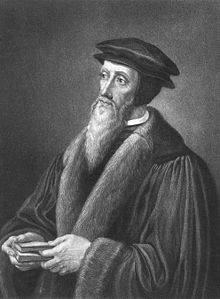 Yesterday, John Frame’s page on Facebook posted this question;
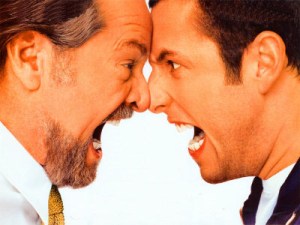 We cannot avoid conflict. As much as we’d like to think otherwise, when sinful humans interact, something is bound to erupt. If you’re a conflict avoider like me, this topic is one to wrestle with.
 TheoThoughts