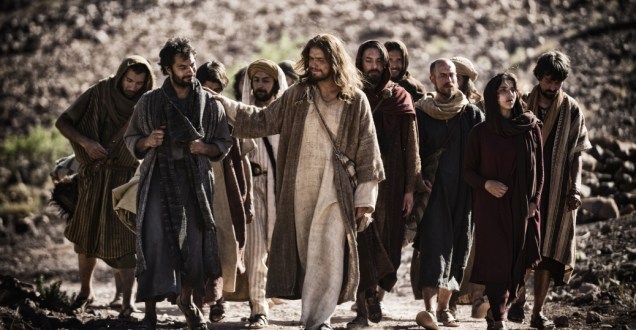
About that time Peter demanded his religious freedom

jesus-and-disciplesIn what has been one of the most bizarre, sleaziest election season, it goes without saying that the choice for Bible adhering, gospel-centered Christians has been quite challenging. Typically motivated by issues of life and religious freedom, it makes perfect sense to me that there is a natural compatibility of Christians towards conservatism and are either fully entrenched in the GOP or as independents, like myself, lean right and want to uphold these values. We who naturally gravitate towards the GOP naturally want to ensure that one who supports our values will occupy the highest seat of the nation. Not that the executive branch acts alone (why we have a checks and balance system), but there is a certain orientation towards issues that we typically expect.

These concerns are quite legitimate. We care about the rights of the unborn. And we care about the liberties granted us under the founding principles of this nation, that are to ensure freedom of worship. And so the typical response at elections is who will align with these values.

But there’s just one problem. The candidate of choice in 2016 has created an ethical dilemma.

Nonetheless, someone has to occupy the Oval Office. And so many evangelicals have convinced themselves that the issues of religious freedom, right to life and same-sex marriage are far too important to concede to the likes of Hillary Clinton. After all, she would only continue the legacy of Obama with it’s same-sex agenda, government coercion whose ideology goes directly against the grain of the principles upon which America was founded.

And so as conservative evangelicals clamor to justify a vote for Trump, despite the fact that his character maligns every ounce of morality that Christianity represents, the argument goes – but our religious freedom, the Supreme Court, traditional values. We need to live as Christians, after all. And living as Christians in this great nation means we should not have to bow to the heathen regime of Alinky-esque rulers who strive to squash our position.

It’s like this is the most important thing. Continue reading

Another look at racial tension and stuff that divides Christ’s church

white vs black_headsThere’s been a lot of talk about race in the church of late, the need to talk about it, the need for reconciliation, the need to get gatherings to talk about it so that we can be reconciled, the need to point out racial disparities, the need for white people to understand their privilege, the need to keep talking about it, and do something.
Now I’m not necessarily opposed to bringing attention to ways in which the majority culture has imposed a standard of acceptability and normativity into the evangelical culture and the broader fabric of society. After all, we cannot dismiss the premise that resulted in slavery, Jim Crow and more subtle unequal treatment of minorities – that black skin was considered inferior. Especially being in the PCA, a denomination that recently took decisive action in repenting of a past that thwarted equal acceptance of black people and other minorities into the fold, I appreciate when we can bring to light how the church has behaved inconsistent with it’s mandate to welcome all who seek Christ on equal terms, as equal heirs to the kingdom of God. See this wonderful reflection here from an African-American PCA pastor.

But I confess, often experience tension. Tension exists because I don’t want to be dismissive of ways in which marginalization occurs with even an unconscious bias regarding consideration of black and brown people. Don’t believe this happens? Just check out the make up of prominent conservative evangelical conference speakers. But on the other hand, I think we can raise the issue to a point of prominence that should not be and become so overbearing with the issue that it distracts from our ability to truly live as those whose chief affiliation is union in Christ.

One of the biggest challenges I’ve found to having conversations about race is the varying perspectives, sensitivities and experiences involved. Even for those with sensitivities, they still range on a spectrum. Specifically, for black people, the range goes from recognizing that injustices have incurred but also realizing that racism will continue until Jesus comes back and sets everything right. In other words, there is not a great expectation for every jot and tittle to be addressed since it is the product of a broken world. On the other end of the spectrum are those so sensitized to both historical injustices and present realities, that any slight can be perceived as a continued devaluation and proactive efforts are needed for correction for some kind of racial Utopia. Continue reading

That moment you trust in the Lord

man-praying whand raisedWell, first let me preface this post by saying I’m not so much referring to the moment of conversion, when you become a Christian. But I’m referring to is the on-going process of trusting in God to be who he said he is.
The other day I got into a good discussion with friends about trusting in the Lord. “What does that mean?” one asked. I think on a surface level we understand that to be trust that God is on our side and work things out. But I think it needs to deeper than that – trusting in who God says he is and relying on that in the face of contradictions.

Now, I’m about to get real honest in this post. What about to share is not for those whose life has gone pretty well or even better than expected and/or those inclined to dismiss the realities of living with deep disappointments. If that’s you, you might want to sit this one out.

For those who have experienced disappointing twists and turns, busted dreams, failures of various sorts and the overwhelming feeling that you thought your life would turn out better than it has, and boatloads of unanswered prayer this post will probably resonate with you. Because let’s be honest, all of these factors can take a toll on our ability to trust in the character of God.  You can be substantially challenged when experiencing a good amount of unanswered prayer, when you’ve longed for him to intervene in situations and circumstances and he hasn’t and those nagging questions if God really cares bubble up.  It’s when you’ve poured your heart out to the Lord for years for personal concerns to get back…nothing. It’s when you’re confronted with pending change of circumstances for the worse, and you wonder is God going to hear me this time? I know I have. And I know how easy that is, over time, to allow those thoughts to dominate, to shape how we see the character of God. Continue reading

Why Positively Powerless (expanded) is positively needed

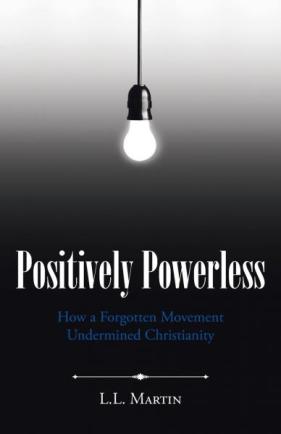
book cover_positively powerlessRecently, I was in a business meeting in which I represented the organization I work for in a collaborative project with other organizations. The collaborative involved a grant application and therefore was contingent upon receiving those funds to be implemented. While we were putting the application together, at times others involved would assert positive declarations about receiving the funds under the premise that this would happen if we just declare it…in Jesus name.

These folks were acting on a strain of teaching that has infiltrated evangelicalism, that is positive declarations are needed to make circumstances happen. In Positively Powerless, Laura Martin, DTS grad, addresses the foundation and fallacy of this teaching as it contradicts the premise of Christianity. She sketches the historical development, which is built on the Positive Thinking movement that considers the mind a force in which we can “will” events in our favor. She notes this is not found in Scripture but rather has its foundation in Eastern Mysticism (I would have loved to see this built out a little more).

She then provides a snapshot of what Scripture does provide regarding the reality of sin and how that has impacted us. More importantly, Christianity is not built on positive declarations but rather submission to the lordship of Christ. In Jesus’ upside down kingdom paradigm, “success” from a kingdom perspective will sometimes result in our lives not looking successful or at least as the world sees it. We will see complete reversal of the Fall’s effect in the new heavens and new earth, but not entirely now. I love that she brings up Joni Erickson Tada because she is a prime example of what successful Christianity looks like from a Christian perspective, which does not jive with the proclaimers of positive thinking.

The chapter entitled A Christian View of Self is particularly noteworthy.  Fueled by the the prominence of self-esteem that took root in Christian teaching in the 20th century, positive thinking places an emphasis on the power of self to create reality in contrast to the emphasis on Christ. She concludes, “When the church came under the power of this movement it had the significant consequence of distracting us from Christ, shifting our priorities, and creating a different gospel entirely.” Indeed, this movement has created a great distraction and emphasizing the wrong things! Continue reading

The greatest lesson I’ve learned for successful Christianity

man standing on rockI’m not really a task oriented person and shun the standard listicles of how you can have a better life. Our world today gravitates towards simplified pragmatism for improvement and living a Christian life is no exception.

However, I might just break that disposition . . . maybe. There is one principle I’ve learned in all my years of Christian living. It’s the one thing that successes and failures and trials and disappointments and uncertainty and bad church experiences have brought me to time and time again. What is this one principle, you ask?

Get over yourself.

Yep, that’s it. Everything rests on that. Yes, but what accepting Jesus? Well, it starts with that. First, I had to get over myself to even be a Christian. It’s when you realize there is no way that any goodness on your part makes you acceptable to the Father, that your best efforts fall way short and it is only through faith in Christ. It means wholeheartedly accepting his life, death and resurrection and what that means.

Then, I had to try to understand who this God is. Though I spent some years following all kinds of distorted roads, over time, I came to realize that he spoke to us through his written word that testifies to the Incarnate word through whom we come to God in the first place. I came across hard passages, stories that made me cringe, divine actions that made me question, and I ask questions. Lots of questions.

However, in all my years of Bible reading, I’ve recognized the importance of getting over myself. Because you see, I could read hard things, troubling things and then set myself up as judge and jury over God’s actions to determine what I would find acceptable or not. I could shape my own version of Christianity based on my level of comfort and acceptability. But that would make me full of myself. Continue reading