Christmas, Jesus and the ‘Other’

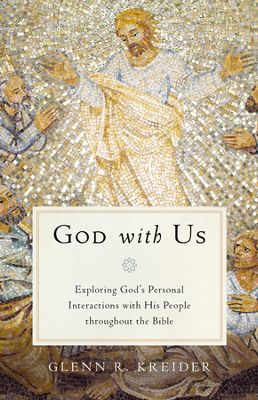
Kreider_God with us coverMy seminary professor, thesis advisor and friend has written a compelling book, recently released in time for this Advent season. In God With Us: Exploring God’s Personal Interactions with His People throughout the Bible, Dr. Kreider traces the biblical story of God’s intentional interaction with this creation through his self-revelation that demonstrates his care, concern and particularly outreach to those who seem the most unlikely to be recipients of his blessings. I plan on doing a full review of the book both on this sites and others I contribute to. But for the time being I thought it appropriate to highlight how this theme comes through in chapter 6, “The Everlasting Incarnation of the Eternal Son” that recounts the story of Jesus’ birth and is quite the timely read for the Advent season.

Dr. Kreider points out throughout the book, and in chapter 6 especially, how God reached out to those who seemed to be beyond the acceptable crowd. He notes in the genealogy;

The ordinariness of his [Jesus’] family tree is made clear, particularly in Matthew’s genealogy. Rather than ignoring the disreputable characters in Jesus’ heritage, Matthew names them…When Matthew names characters, those familiar with their stories remember the shameful details. Perhaps more importantly, we remember that in all of these stories, God shows his grace and mercy to people who are outside the community of faith. These sinners who receive divine grace make it into the community of faith. These women are part of Jesus’ family. The child comes from a long line of unlovely people. When he comes to earth, when he becomes human, he identifies with these outcasts in order to save those who are like them (see Heb. 2) (115-6)

He recounts the story of Jesus’ birth, familiar to so many but provides a fuller dimension than your typical Christmas pageant version and goes beyond the unsavory circumstances of Mary’s pregnancy. The announcement to the shepherds is really compelling considering who they were;

These shepherds were not the well-groomed, clean, mannerly men and women who appear in church Christmas pageants today. First century shepherds were dirty; they spent their time outside, in all kinds of weather, taking care of sheep. They were ceremonially unclean; caring for animals, they dealt with injuries, illnesses, and other matters related to animal husbandry…Like the magi–although at the opposite end of the socioeconomic spectrum–the shepherds were outsiders in Israel. The gospel is good news for outsiders and the disenfranchised, and on the day of Jesus’ birth this good news is announced to a representative group of this kind of people. (123)

Continue reading

The Little Things: thoughts on race, compliance and subtle discrimination

Black_businessman among whitesI don’t usually write on issues of race and for good reason: it tends to garner heated debate, polarized perspectives and people talking past one another. In “post-racial” America, its tough to talk about issues of oppression and injustice because of all the progress Blacks have made in this country. After all, slavery ended 150 years ago, Jim Crow is over, the “Whites Only” signs have been removed, schools are integrated, and Blacks have risen to prominent stations in society.


Everything seems to be ok until something happens…like Ferguson and now Eric Garner. Then issues of race rise to the surface. Then something happens, I’ve noticed, something subtle yet prominent. There is still an undercurrent of inequality and trickles of suppression in drips of dispositions towards these kinds of incidences.

The premise of racism in America has been built on perception and belief that the Negro was inferior to Whites. It was ok to ship men, women and children like cattle and sell them off like property. For a country that was founded on the premise that all men were created equal, that equality came with a qualification for Blacks as the sub-dominant group. Sure there were free Blacks, but freedom was only free as long as it was granted.

As the dominant group, Whites also wrote the narrative for parameters and progress. Whatever Blacks had, they were allowed to have with the expectation of gratitude towards the giver, especially acute in places of slavery. There was also an firm expectation of compliance.

Go along to get along. Know your place. Lower your eyes. Don’t make waves. The negro dare not rebel or face the consequences. Continue reading

This is a man’s world: why don’t women just get it together?

man-leading-wifeThis post is not to debate complementarian vs. egalitarian. I have maintained that there are godly men and women who take the authority of Scripture serious and arrive at different conclusions. I also believe that positions on male leadership are really only pertinent to church and home, which is why I think all the brouhaha in public disagreement is often misplaced.

With that said, Andreas and Margaret Kostenberger have come out with a book on how Genesis to revelation portrays God’s design.  In this interview, Dr. Kostenberger makes some good points about the biblical pattern of male headship.

However, I was struck by his response to question if this same paradigm applies outside of the church. His response;

With regard to women in the workplace, we’ve found that a helpful question for couples to consider is: Will the woman, if married, be able to give her best hours and energies to those God has given her to care for in the home and family? This applies to ministry involvement as well. Consider God’s creation design (Gen 1:26–28; 2:18, 20) in conjunction with the primary spheres of ministry given to the woman as highlighted in the judgment she received after the fall, which stands in direct relation to her role in childbearing and with her husband (Gen. 3:16; cf. 1 Tim. 2:15). Consider also the role model of the virtuous woman in Proverbs 31, who is portrayed as centered in her home and fully supportive of her husband. And note Paul’s references to women being workers at home (Titus 2:5), widows being honored who have been faithful wives, having brought up children and shown hospitality (1 Tim. 5:9–10), and younger widows being encouraged to marry, bear children, and manage their households (1 Tim. 5:14). Women on mission for God together with their husbands will be able to rejoice in all God has for them as they’re centered in the home and ready for all he calls them to do individually. Single women, too, unless called to permanent celibacy (1 Cor. 7:7–8), can prayerfully nurture and prepare for this and incorporate some of this in their extended and church family experience.

Regarding political office, there are no direct commands in Scripture encouraging or barring a woman from leadership roles. Again the question is: Will she be able to fulfill her primary God-given role in the home and family? Could she continue to support her husband’s leadership in the areas to which he has been called and to nurture her family if she were to take public office? This isn’t a question of giftedness or competence but relates to God’s design in making people male and female.

Continue reading

Jesus’ name is not a magic wand

In the last hurrah of instruction to his disciples, Jesus tells them he is going away but sending the Spirit so that they can bear witness to him. (John 14-16). He told them.

Whatever you ask in my name, this I will do, that the Father may be glorified in the Son. If you ask me anything in my name I will do it. (John 14:13-14)

Taken by itself, the passage seems to suggest that just by using the name Jesus, he will do whatever. But measured against the breadth of Scripture, and specifically in this pericope, praying in Jesus name relates to what he is instructing the apostles to do in terms of being witnesses. Tim Keller has recently wrote a book on prayer that looks pretty good. In this TGC interview, here is what he says about praying in Jesus’ name;

To pray in Jesus’s name means to acknowledge that we only have access to the Father’s attention and grace through the mediation and work of our Savior. So just using the words “in Jesus’s name” is not sufficient. We use the words to reinforce the required attitudes and motives. To pray “in Jesus’s name” is to come before God in both humility (knowing we don’t deserve God’s help) and confidence (knowing that we are clothed in Christ’s righteousness and worthiness), as well as grateful joy.

To pray in Jesus’s name, then, is to be aware of the grace of the gospel as the basis of prayer, and to have our attitude in prayer deeply enriched—both humbled and exalted. When we consciously or unconsciously expect God to hear our prayer because of our relative freedom from overt sin or because of our service and moral effort, we are praying in our own name.

Magic-WandI often get the impression that the name of Jesus is used like some kind of magic wand. All one simply does is declare “in Jesus name”, wave it around the target and wait for results. But it doesn’t work like that. Praying the name of Jesus is not an incantation that creates a mystical force that makes things happen. In fact, that is actually anti-Christian (like thinking that our words have power to change circumstances).

To pray in Jesus name represents our ability to come to the Father because of the mediating work that Christ accomplished on our behalf. That means praying in a manner consistent with his character and will in recognition of our union in Christ and what he delights in. Praying in Jesus’ name is an appeal to the Father for him to work according to his will. There’s nothing magical by using the name but there is something quite moving when we allow what the name of Jesus means in terms of our heavenly citizenship.  

Have You Heard of My Pastor? Why it’s probably good that you haven’t

As the Mark Driscoll drama has unfolded, I continue to reflect on how this has happened and what it says about contemporary evangelicalism. Clearly, his behavior and myriad of charges against him have simmered under the surface for far longer than it should have. Now, that it’s boiled over, one thing is clear – everybody knows who Mark Driscoll is.

rock concert_man on stageIn fact, he was pretty popular even before the eruption . . . For a long time. And people praised and applauded him. They loved the splashes that he made, or more like the tidal waves he caused with machismo brand of Christianity and his (rather stunted) version of the new Reformed movement. And for me, this just further confirms the celebrity factor in evangelicalism.  Just look at how his story was displayed in Vox, Megachurch pastor Mark Driscoll was an evangelical rock star.

Yes, a rock star. Famous. Known. Applauded

I believe this was a contributing factor to the longevity of his antics. Over at Cripplegate, Jesse Johnson wrote a pointed but needed commentary, Driscoll Drama: to those who sold tickets. He rightly criticizes other notable evangelical leaders (we may be able to translate that “celebrities”) who not only gave a pass to what should have been obvious disqualifications for pastoral leadership, but actually endorsed it.

Let’s not be fooled. It’s not just the leaders but the fan base in general. Yes, fans. Because that’s what happens with celebrities. It really didn’t matter what was going on in the course of actual pastoral relationships, Driscoll drew a crowd. He got men to come to church. He wrote books (well, kind of). He spoke at conferences and challenged the status quo (or at least what he thought needed to be challenged). And, he had a big church. A really big church. And people praised him.

This is why I cringed when I saw this article on the Blaze, He Survived Brain Cancer and Now Leads a Church of 11,000 – but have you heard of him? No, not Driscoll but Matt Chandler. Now, I am in no ways comparing Driscoll to Chandler. I’ve heard him speak a few times and know people who attend the Village Church where he pastors. He certainly doesn’t have the reputation that has surrounded Driscoll. Continue reading