Is There a Third Option in the Comp/Egal Debate?

I expanded my last post and published it on Parchment and Pen. Interestingly, it got little notice. But the post also pointed to an article I wrote three years ago on why I don’t get into the gender debate.  Unfortunately accusations of self-serving motives quickly arise at the mention that there might be an injustice of women’s value according to scripture. On one hand it is good to just quietly work out your gift and align with ministries that match your theological conviction. But on the other hand, there is so much strained and distorted thinking out there with respect to gender roles that it does compel some challenging.

I’ve come to reject the polarization that has occurred over the past few decades. While I identify myself as a Complementarian, I find the practical aspects of this position as it has been traditionally espoused to not be very complementary at all. Restrictions on gifts and contributions does not really serve the body well or the husband at home.  I think we’ve made much more of headship and submission than is warranted in scripture.  On the flip side, I cannot justify the complete obliteration of male headship since that would be dishonest to scripture. There is a place for male headship and for submission. That screams for a third option. In the end it is about the Father, Jesus and the Holy Spirit, the word, faith, family and the church’s mission. Can’t we find a solution that takes care of business, reflects the imago Dei and just respects each other?


Kingdom Warriors

Today a conference is going on here in Dallas for men entitled Kingdom Men.  For obvious reasons, I have no interest in learning about being a kingdom man. But what I fear is that the Kingdom Man agenda has been so skewed towards the domination of men, that women get lost in the dust. I get the sense from some Facebook posts I’ve seen today that only men are kingdom warriors. The unfortunate reality is that it is a product of a poorly translated concept of the woman’s identity as a help-meet. What gets missed is that women are kingdom warriors too, co-regents with men over the earth.

The term helper is translated from ezer gets a bad rap as the woman being dependent upon the man as the head. A closer look reveals that ezer has the connotation of being a rescuer. When God saw that it was not good for man to be alone and that he needed a suitable helper, he sent a rescuer.  The NET Bible notes:

Traditionally “helper.” The English word “helper,” because it can connote so many different ideas, does not accurately convey the connotation of the Hebrew word עֵזֶר (’ezer). Usage of the Hebrew term does not suggest a subordinate role, a connotation which English “helper” can have. In the Bible God is frequently described as the “helper,” the one who does for us what we cannot do for ourselves, the one who meets our needs. In this context the word seems to express the idea of an “indispensable companion.” The woman would supply what the man was lacking in the design of creation and logically it would follow that the man would supply what she was lacking, although that is not stated here. Continue reading

Sin and Brokenness

The past couple of days I’ve been in off and on discussions over this post here by Kevin DeYoung.  He takes issue with the word brokenness citing an overuse that leads to an undermining of sin. Specifically he says

But as a metaphor for sin, “brokenness” is seriously limited. The term does not convey a strong sense of moral culpability. If anything, it suggests a helplessness in the face of external forces and circumstances. It gets nothing of the Godward direction of sin. In fact, the term “brokenness” sometimes feels like a safer, less-offensive euphemism for sin. Instead of confessing rebellion, disobedience, guilt, or moral evil, we only have to acknowledge that somethin’ ain’t right. We don’t work the way we should. We’ve been wounded before. We’ve had a hard go of it. I’m not suggesting those who use the term “brokenness” are trying to avoid their sins or the minimize the sins of others. But the language can have that effect.

First, I think its quite the projection on his part to assume that people are using it as a metaphor. People are basically speaking what they know – that they are broken. And we are broken because of sin. Sin leads to brokenness. They are two sides of the same coin. The impact of the fall has had much damaging consequences on God’s creation. It groans. It bites. It growls. It attacks.

Second, he starts the post indicating that in Christianity words matter. Now I am all for theological integrity and articulation. But in Christianity people also matter. Perhaps the average Joe Christian cannot articulate the doctrine of hamartiology with his precision, but anyone who has suffered the impact of sin knows its very real presence. That’s not undermining, that’s just truth.  Neither does it mean they are going soft on sin or translating brokenness into a lack of culpability. It just means they hurt because the wages of sin is death. To advocate dismissal of the word, also dismisses real human experience. And that is dishonest. I think the body of Christ is better served with honesty than an unnecessary wrangling of words and unfortunate exaggeration.

I also think this points to another issue also that I’m not necessarily projecting into DeYoung’s post but is pretty commonplace. People generally understand brokenness to the extent that they experience it and I often find a certain smugness exists with those who haven’t really experienced a great deal of it.  It then becomes kind of easy to be dismissive of deep expressions of life ache then accuse the sufferer of lack of Christian commitment.

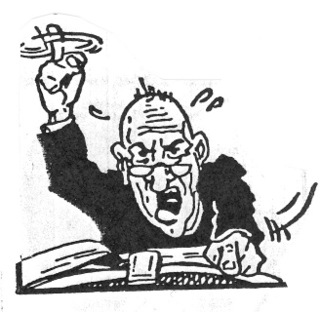
The Angry Preacher

I thought of this adage today – you can catch more flies with honey than with vinegar. It occurs to me that the same goes for preaching and teaching also. After all, people don’t respond well to vinegar. Interestingly, I posted this on Facebook and it generated some passionate discussion. One pastor was insistent that the church today needed a strong word, suggesting that there were too many slothful people sitting in the pews. He also cited examples of Jesus rebuke of the Pharisees.

Now I do believe there is a place for reproof and rebuke.  Confrontation of false teaching in the church is certainly grounds as well as a willfully sinning brother or sister. But I’m also reminded from 2 Timothy 3:16-17 that it is scripture that reproves and rebukes. And the work of the Holy Spirit!. Moreover, Jesus confronted hard hearted unbelieving self-righteous group. That is different than believers who need to learn and grow. If the preacher adopts a consistent tone of anger, I can’t help but think there is something of self-interest involved even if it wears a spiritual dress (like filling seats, getting more volunteers, alignment with pet agendas, etc)

Moreover, if the congregation responds to an angry tone to do whatever the pastor is pounding the pulpit about, is it because of fear and a desire to make the pastor happy OR is it because of true conviction from the Holy Spirit? I think the former will only foster legalism so that everyone conforms to demands while the latter produces true growth. Anger can actually get in the way of the spiritual growth.

Except in rare cases, I don’t think preaching needs to be done with anger.