The Smallness of Doing Big Things for God

This is a common theme I’ve heard in Evangelicalism- do big things for God. Typically what it translates into doing something that will impact people on a large scale, which naturally leads to a focus on notoriety about accomplishments. And this is something I’ve become increasingly aware of and disturbed by. We applaud those are in the limelight because of some grand accomplishment and marvel at their success.

An underlying problem that I think fuels this mentality is that contemporary Evangelicalism has capitulated to the American dream success culture. Mega-churches, grand accomplishments, celebrity pastors with book deals and media attention serve as the gauge of how success is measured. We are attracted to this type of success because maybe it shows how much we’re winning at doing Christianity.

So what does this do to average Joe Christian who will never see this type of notoriety? You know, the person who just goes about living their life and serving God the best way they can? Would it not create an impression that he or she is not doing big things for God, that they are not doing enough? I bet it would. It minimizes their contributions to the body of Christ. Continue reading


A Gospel Poem

I confess, I’ve felt a little overwhelmed the past couple of days. No, not the kind of schedule overwhelm that typically pinches me from time to time given all the balls I’m juggling. But the sense that I’m not doing enough, not achieving enough, not loving enough, not giving enough, not faithful enough and so on and so on for the kingdom.  But I realized that of course I don’t and you don’t either dear Christian. Because as long as we’re looking at our efforts and what we do and don’t do, we’ll miss the beauty of the gospel that breathes life into our Christian existence. And that btw, is based on what the Father did through his Son and continues by the Spirit. The gospel gives us rest from need to trust in our accomplishments. So I sketched this poem together this morning to remind me that we need the gospel every day.

The gospel is needed every day

Since relying on me I will fail in some way

It tells me He did what I could not achieve

That progress is made when I trust and believe

Not trust in my efforts to earn any praise

But looking to Him for the rest of my days

For by grace we are saved that He constantly gives

The same grace that helps us through this life we must live

So cease your self-striving and in Him abide

Knowing He sits at the Father’s right side.

“Come unto me all you who are weary and burdened and I will give you rest. Take my yoke upon you and learn of me for I am gentle and humble in heart, and you will find rest for your souls. For my yoke is easy and my burden is light” – Jesus (Matthew 11:28-30)

How Should We Handle the Worship Music Wars?

For some odd reason, the topic of worship music has been in my face today. I came across this quote from a Facebook friend.

“As a listener I can only speak for myself, but I find that more challenging music can better communicate the sense of wonder and awe appropriate to a religious setting. If I want to sing a bunch of stale, bland pop songs, I’ll have a campfire, not go to church. That probably puts me in the minority, but there must be others. And I worry about the cumulative impact of always choosing the lowest common denominator of music as a medium of worship. It drives people like me to get their kicks elsewhere, and it sets your average churchgoer into a pattern of expecting emotional feedback from worship, which isn’t the point.” Jordan Bloom

Admittedly, I am not familiar with Jordan Bloom but I appreciate what he has to say here, except for the “emotional feedback”. If reflection on the character and work of the triune God doesn’t make me emotional then something is wrong.  But surely there is much to be said for music that accurately reflects Christian truths in a robust way.   A rejection of hymns dismisses doctrinally rich music that can fuel the fabric of our faith. So I appreciated what Stephen Miller had to say in this blog post, Why New Churches Should Sing Old Songs. I for one appreciate the old hymns and what they convey. Continue reading

Why Do Poor People Need Cell Phones, Anyway?

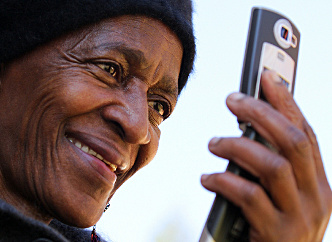
poor person and cell phoneTypically, this question is posed with a bit of disdain because of opposition towards government programs that provide subsidies or any type of assistance for the poor. In fact, I recently saw this rather biased report that supposedly exposed the real conditions of the so-called poor. Some have TVs, microwaves and even cell phones. I think the sentiment behind this exposure is pretty obvious. If you’re really poor you wouldn’t own these conveniences.

I’m going to suggest that these unfortunate statistics and statements not only demonstrate a lack of knowledge about the real issues of poverty, but also reveal a disturbing bias against the poor.  It presumes that somehow a couple of electronic “conveniences” lifts that person out of poverty without any consideration to the much larger issues the poor have to face, such as substandard housing, lack of access to quality healthcare, deficient skills for marketable income and limited options to advance towards greater self-sufficiency.

Now, I do understand the concerns over our tax dollars going to support those who don’t want to take personal responsibility for their lives and rely on government subsidies. I sympathize with the frustrations related to big government and an astronomical federal deficit. But if you think that describes everyone who lives at or below the poverty line, which by the way is a mere $23,050 annually for a family of four, then think again. Continue reading

In the Body of Christ, Extroverts and Introverts Need Each Other

I was expressing to a friend of mine the other day, how I don’t like sitting in large churches where I don’t know anyone.  The reason is quite simple. I am an introvert. Now I can be quite charming and sociable when I know people. But put me in a room full of strangers and I can get quite socially awkward. It is one reason I prefer smaller churches and/or places where fostering relationships are easier.

One common piece of advice that I get regarding my introvertedness is that my problem is I need to make the first move. In other words, the reason I often feel disconnected in a crowd or unable to make friends easily is because I’m not an extrovert. Basically, that is what this advice suggests. So the solution is to stop being an introvert but be an extrovert.

I am troubled by this advice, which I’ve heard so much. First, it tells me the problem is that how I am designed is deficient.  Second, it is telling me that I should be someone I am not.  And while I admire those who are able to overcome their introvertedness, I don’t know that is the best solution.

I recall many times when I’ve been in a situation where I was or had the propensity to be socially awkward and what broke me out of it was interacting with an extroverted person.  What this says to me is that the extrovert being who they are helped me with who I am.  That is where some really good connections were made.

Taking that a step further, I can’t help but see the application for body life in our Christian communities. Rather than telling the introvert or the extrovert to be someone they are not, they can help each other by being who they are. The extrovert can break an introvert out of their shell. On the contrary, since extroverts can be overbearing, the introvert can calm them and curb the propensity towards intrusiveness.

So I really think we need to evaluate how we advise people to overcome their introvertedness or even extrovertedness. Let them be who they are. They need each other.