 I hope I approach this delicately since I know this is common language used to describe the relationship Christians have with Jesus Christ. To be honest, I don’t know how this terminology originated but I believe it is a more recent phenomenon. While I know this to be a widely embraced concept that relates the presence of the Lord with us, I want to reconcile how this fits with in terms of the nature of God, and specifically how this relates to the Christian’s union with Christ.
It is essential for Christians to understand God’s character and works according to his triune nature. God is one yet operates at all times interdependently as three distinct persons. All activity of God is according to the Father’s will. The Father sent the Son so that God could be fully revealed to humanity (Colossians 1:19; 2:9). The incarnate Son of God took on humanity such that he was fully God and fully man and gave himself as a living sacrifice so that the righteousness of God may be imputed onto those who believe in Him (2 Corinthians 5:21; Romans 3:21-26).
Prior to his death, burial and resurrection, he informed the apostles that he was going away but that he would send the Advocate, who would be with them just as he was (John 14-16). After the resurrection, he ascended into heaven where he sits at the right hand of the Father (Acts 2:33; Hebrews 1:3; 8:1; 12:2). Union with Christ occurs because the believer is given the Holy Spirit who baptizes us into the kingdom (Galatians 3:27; 1 Corinthians 12:13; Ephesians 1:13-14). The Holy Spirit enables us to accept God’s truths and turn our affection towards him through belief in the Son. The filling of the Spirit (cf Ephesians 5:18) means that the Spirit influences us to live lives of obedience, trust and worship of the one true God. But Christ himself is with the Father. Continue reading
 Today was a bit of a milestone and one that I’ve looked forward to for quite some time. I registered for my final semester of seminary, or at least the ThM program (meaning there may be a possibility for the PhD program). Well, I still have to complete everything: this semester, thesis and the remaining 5 classes that will be taken this coming summer and fall. But it signifies that the end of something is near and the transition to a new chapter is on the horizon.
 As I’ve started my master’s thesis process, I’ll probably be posting time to time on thoughts that arise as I go. I’m addressing how God speaks today and making a case for him speaking sufficiently through Scripture. Of course that doesn’t negate the subjective experiences that we have but puts them in a framework. Now I know just saying that raises the hackles on some folks. But I think a lot of confusion exists because when we see God speaking to folks in Scripture is not adequately seen through the broader spectrum of his self-revelation. Anyways, like I said, more to follow.
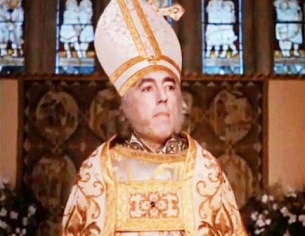 “Love, true love” as the priest in the Princess Bride proclaimed in the marriage (mawwege) ceremony. Many of us want that. There is something in us, to varying degrees that longs for that deeper connection with another. As a Christian, the reality of love can be even more piercing as we are illumed with understanding that the source of love is God. Not only does he give us the picture of what it means to love but also gives us the ability to do so.
 Well, here’s a bit of a dicey if not morbid topic. I bring it up because I find there is a tendency when Christians learn that another Christian has died, to have a celebratory response to death. Why? Because that saint has gone home to be with the Lord, which is a widely expressed statement regarding death of a Christian.
 TheoThoughts