I am often confronted with the strange ways the Bible is interpreted. I don’t mean the deviations in various interpretations, such as baptism, spiritual gifts or eschatology, but interpretations that subject the meaning of the Bible to standards that are disconnected from it’s nature and purpose.
I came across this hilarious video from the new Family Feud game that is hosted by Steve Harvey. Take a listen;
Funny and yet sobering, reminding me of ways in which some treat the Bible as if we can make it be whatever response we want AND get excited about it! I find so often that this brother’s “Texas” can be our approach to the Bible. By that I mean, employing methods that have nothing to do with the Christ-centered theme of Scripture. I’m talking about reading definitions into the text or extracting meaning out of the text that is not even related to what the author is trying to communicate or even connected to God’s redemptive narrative of what he is accomplishing through the Son.
Over at The Gospel Coalition, David Schrock has provided both a fine example of how we can disconnect passages from their intended meaning. In Jabez and the Soft Prosperity Gospel, Schrock indicates that the primary reason for interpretations that result in a sub-Christian or anti-Christian paradigm results from making personal applications of Scripture and not considering how passages relate to the overall theme of Scripture. Continue reading
 Now, a lot of this really resonated with me since I’ve written similar prescriptions of why we might find Bible reading boring. Anyone who has followed this blog for any amount of time knows my passion for believers being serious about Bible reading and comprehension. In fact, I would expand on his 2nd point about the Bible being too hard in that Christians really need a framework to understand how the 66 books fit together as God’s complete story of redemption. When I consider my own trajectory in Bible reading, my comprehension of the holistic Christ-centered nature of Scripture has evolved and is evolving over time because of the direction of others. But especially because of how it is emphasized in the preaching and teaching of the Word at my church. Over the past decade, I have been increasingly exposed to preaching that considers the holistic nature of Scripture not just cherry picked verses to support whatever instruction the preacher wants to provide so that I do x, y and z.
  I was cleaning out some old email and came across this letter to subscribers from Greg Koukl, Stand to Reason Ministries. He makes a good case for black letter Bibles, that is NOT having Jesus’ words in red letters. But the stronger case is for considering how God spoke through all Scripture. Here’s what Koukl says;
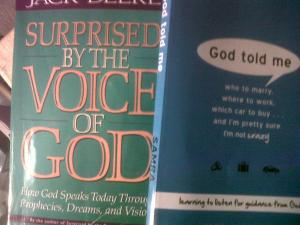 If you’ve been following this blog for some time, you know that I recently graduated from Dallas Seminary with a ThM Degree. However, graduation was delayed due to delays in my thesis completion and approval. Despite the struggles, it was worth the endeavor because I wrote on a topic that I believe deserves addressing in our contemporary evangelical environment. The title of the thesis is “God Already Spoke: A Response to Extra-Scriptural Divine Speech.” I interact with three books that encourage hearing the voice of God outside of Scripture. These books are Surprised by the Voice of God by Jack Deere, God Told Me by Jim Samra and Jesus Calling by Sarah Young. I refute the premise these authors promote that God needs to tell us more about himself or his requirements for us than what has already been communicated through Scripture.
 TheoThoughts