 Continuing on with the series and keeping the overview in part 1 in mind, the significance of Genesis is that it lays the foundation for what God is establishing with respect to his creation. The beginning explains the how and why God started everything. To reiterate what I said in the overview, God is revealing to us who he is and his expectations for his creation. Also, it’s important to remember that when I reference creation that means all of it, humanity and the earth.
A couple of points are noteworthy here. One, Genesis was written by Moses to the children of Israel while they were wandering through the wilderness. Now think for a minute what was going on with them. They had been called as a people of God’s own possession, delivered as a people from the hand of oppression and delivered with promises of a land where they’re position would thrive as a light to all nations. But for the time being, they were slogging through a seeming nothingness and feeling forsaken. The Genesis account informs Israel of how and why they were formed in accordance with the God of creation.
And this leads to the second noteworthy point. The creation account unfortunately gets bogged down with dissections about the earth’s age. In my opinion, this is a distraction from the purpose of the text. Moses is not revealing to Israel the creation account as some sort of scientific treatise about the genesis of the earth, but to tell them THAT God created everything, out of nothing and had a plan for his creation. His plan was that man (man and woman working together) being made in the image of God was to subdue the earth, to reflect his glory. What God intended for humanity cannot be dismissed for what would happen in Genesis 3 but bear important implications for how his people would work together for the sake of his kingdom.
Another significant aspect of Genesis 1-2 is that it demonstrates that we cannot divorce the spiritual aspect of reconciliation to the Father with what he desires for creation. He said ‘it is good’ which means that the physicality of creation is important. Continue reading
 Before we can talk about the parts of the Bible, it helps to know what the Bible is. For much of my Christian life I’ve heard references such as the God’s instruction manual for Christian living. While I think there is some truth to that description, it does not adequately describe what the richness of these 66 books. Moreover, if we reduce the Bible down to a user manual or book of propositions, our tendency will be to miss the larger story of redemption.
 I want to announce a series that I’ll be starting soon called The Bible in a Nutshell. It’s not a Bible study in the sense that I’ll be going through a book or portion of a book. Rather, it’s taking what I call the 20,000 foot view and considering how the Bible tells one cohesive story from Genesis to Revelation. For now, I plan on 8 segments outlined at the end, in which I hope to provide some insight into how each section of the Bible fits into the overarching narrative of Scripture. I don’t subscribe to be any kind of authority on Bible reading but I do want to pass on some lessons I’ve learned in my many years of studying Scripture and pitfalls to avoid.
 Today, a friend asked me to explain what is covenant theology. I get the question and it’s one I would have asked years ago at the mere mention of the name. In fact, when I first heard the term several years ago, my immediate frame of thinking was this: it is a system of thought imposed on Scripture especially when terms like covenant of works and covenant of grace are used to describe it. Unfortunately, unless you’re immersed in Reformed and particularly Presbyterian circles, this idea of imposition can cause a spurning of sorts as if somehow this is contrasted with the just reading the Bible. In simple terms, covenant theology can be rejected because of an erroneous belief that it is doctrine imposed on Scripture and wholly separate from a biblical theology derived from simply reading Scripture.
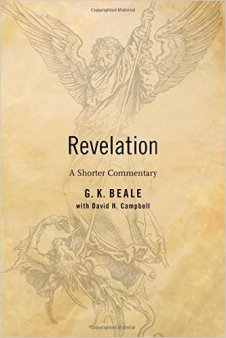 I just received this commentary in the mail having ordered it about a week ago. I normally wouldn’t write a post about how excited I am about my latest book purchase. But this one is a bit special because it fits with the particularly trajectory I’ve been on regarding how I understand the 66 books of the Bible fit together in terms of God’s outworking of his redemptive history.
 TheoThoughts