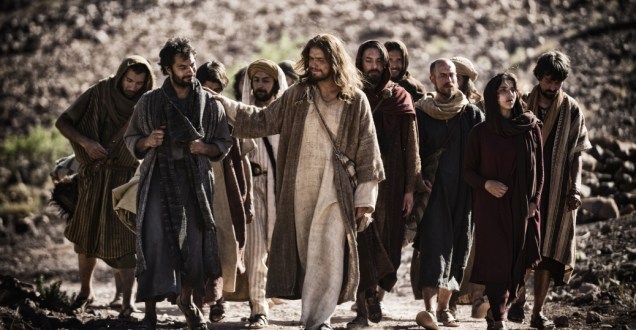
 I’m currently going through the book of Matthew and paused at this passage;
Whoever receives you receives me, and whoever receives me receives him who sent me. The one who receives a prophet because he is a prophet will receive a prophet’s reward, and the one who receives a righteous person because he is a righteous person will receive a righteous person’s reward. And whoever gives one of these little ones even a cup of cold water because he is a disciple, truly, I say to you, he will by no means lose his reward. (Matt. 10:40-42)
It’s the phrase in vs. 42 that caught my attention “whoever gives one of these little ones even a cup of cold water because he is a disciple.” We might be inclined to think that Jesus is referring to children but the context tells a different story. The chapter begins with Jesus sending out the 12, the ones who would proclaim the apostolic message on which the testimony of Scripture rests (cf. Eph 2:20). So by inference, the application today would be those who have a responsibility for testifying to the risen Lord. Yes, that is all of us but I think the context of this passage bears on those who are charged with preaching and teaching.
So the connotation of “little ones” is not about children but those of little reputation. These are the ones who go about proclaiming the name of Christ and speaking his truth. These disciples may not be well known, or seem to do big things for God but their heart is to be a witness for Christ and to live out his truth in their lives. What is Jesus saying here? That the ones who strive to honor him are the ones to be honored. Don’t neglect the “little ones” because they don’t have a big standing. Continue reading
 Now, a lot of this really resonated with me since I’ve written similar prescriptions of why we might find Bible reading boring. Anyone who has followed this blog for any amount of time knows my passion for believers being serious about Bible reading and comprehension. In fact, I would expand on his 2nd point about the Bible being too hard in that Christians really need a framework to understand how the 66 books fit together as God’s complete story of redemption. When I consider my own trajectory in Bible reading, my comprehension of the holistic Christ-centered nature of Scripture has evolved and is evolving over time because of the direction of others. But especially because of how it is emphasized in the preaching and teaching of the Word at my church. Over the past decade, I have been increasingly exposed to preaching that considers the holistic nature of Scripture not just cherry picked verses to support whatever instruction the preacher wants to provide so that I do x, y and z.
 I know that sounds strange. When we think of criticism, we think of something negative and destructive. But being critical does not necessarily have to be a negative thing. Judging something critically involves an intense analysis of what is being presented and measuring it against an objective criteria. Now that can be done in an unloving manner. The blogosphere and numerous pulpits demonstrate show no end of unloving and vicious criticism.
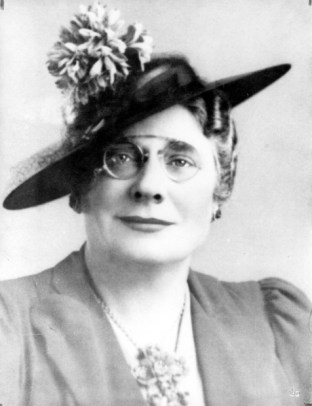 I came across the name Henrietta Mears (1890-1963) several years ago when thumbing through her book What the Bible is All About as I waited for a prescription to be filled. Since that time, I have been fascinated by her. She was a Christian educator and influenced the likes of Bill Bright and Billy Graham. She was definitely complementarian, but smashed the idea that women were only suited for roles of support to their husbands and children. Never married, she dedicated herself to the task of teaching the word of God, holistically, purely and simply and the development of quality resources to accomplish the task, including teacher training and development. Talbot School of Theology did
  TheoThoughts