
Cleaning the Hurt?

nativity-starIt’s no secret that holidays can be a hard time for some. Whether its from broken relationships, disappointments, family dysfunction, regret from the past or just plain loneliness, some will experience hurt. Of course, it’s not just at the holidays although they tend to highlight it. Let’s face it, no one wants to hurt emotionally or psychologically.  There is nothing pleasurable about pain and our desire is to remove it far from us as possible. We live in a very therapeutic culture. Billions of dollars are spent each year on self-help tools, psychologists and other fixes to make hurt go away from our history, mistakes, present realities or future fears.

Christians are not exempt. Having just spent this past semester in a biblical counseling class, it reminded me of how fragile and complex is our humanity and how much the raw stuff of life truly impacts us, even if we want to deny it. There are various tools at our disposal to aid with getting over the areas in our lives that have caused hurt and in some cases, even harm.

But, it strikes me that Christians can become so intent to remove any traces of hurt in their lives, that the sanctifying process is actually hindered. We can spend an inordinate amount of time trying to fix ourselves in order to live a life that’s pleasing…to us, so that we feel good about ourselves. Making peace with your past turns into a creation of peace in the present so that we don’t have to experience hurt in our lives and get rid of those pesky little triggers that catch us unaware.  By doing so I wonder if its possible that we remove the very thing that God works to grow us deeper in our faith and Christian walk. Continue reading


50 Thoughts From Turning 50

50 birthday cakeYes, that’s right, today is my birthday. I confess to approaching a half century of life with some ambivalence. My life hasn’t exactly turned out like I hoped it would at this stage so coming into this birthday was a bit hard. On one hand, I wanted to have a big celebration but then wasn’t really up to it. But some wise words from a fellow classmate kind of jolted me out of myself. He asked if I thought Israel had an option of celebrating the various feasts. No, they glorified God regardless. And I shall do the same. I am thankful for life and God’s many blessings.

In the past several days, I’ve been reflecting on some lessons learned from personal experience and observations about life over these past 50 years and thought I’d jot them down. So in no particular order (translated – not prioritized);

1. The fact that life is unfair and not always kind does not stop us from wishing it were.

2. Pay attention to bad patterns in your life.

3. The hardest person to be honest with is yourself.

4. Value the input from others. Sometimes they see things we can’t.

5. You can’t change the past but pay attention to how it has changed you.

6. People are never who you want them to be and will likely surprise you.

7. The things that present the most discomfort usually point to what needs the most change.

8. Remember the innocence of your youth.

9. Its ok to admit when life hurts.

10. Facades may seem like a good solution but only hurt you in the long run. Continue reading

The Ultimate Fix: A Big Lesson in Little Things

broken cupsA couple of days ago, I woke up slightly agitated. I had contacted my mechanic the previous day to arrange an emergency drop off because all of sudden my car had been making a really loud noise in the front. Having a 17 year old car with over 200,000 miles on it, I’ve accepted that repairs here and there are a necessary evil. But so far, this evil has been far better than a monthly car note. Aside from the inconvenience of arranging rides, my bigger concern was the cost of repair. Being without steady employment, made me a bit anxious since I have to be really cautious about my money and had little room for the extra cost of a repair bill.

My agitation grew throughout the day as I waited to hear back from my mechanic. Normally, they are pretty good about assessing the problem and getting back to me with the estimate. I called them around 1:00 only to find that they hadn’t even looked at it yet. What? Immediately, my mind went to the arranging rides for the morning to get my son to school and me to school to take a final. Normally, they call before working on anything to let me know what needs to be done. The fact that they hadn’t even called by then made the possibility of not getting my car back a greater reality. But I still held out hope.

The drip from the toilet tanks and periodic rushing of water increased the agitation. I had put a work order in at least 3 times and stopped in the management office that morning to remind them of the job. It seemed like they were in cahoots with the mechanic! I tried to focus on the school work I needed to complete but could not stop being annoyed. No call from the mechanic. No one yet to fix my toilet. Just waiting and waiting and being annoyed.

Now you may be thinking how trivial and I agree. In the grand scheme of things, these are pretty inconsequential matters. And considering the bigger issues I’ve been dealing with in my life, I was getting annoyed with myself for being annoyed at such small things. And yet, as I strove to accomplish school work, I could not get rid of the restless waiting and growing annoyance. Stuff needed to get fixed and it was hanging in limbo. Continue reading

Food is Fellowship

friends-eating-chocolateIn the Purpose Driven Life, Rick Warren provided a section on fellowship and noted that food is not fellowship. I recall when I first read that years ago, I thought it made sense. Since that time, I’ve come to appreciate the value of gathering around our most basic need and see it as symbolic of something so much more.
So when I came across this quote in a book I’m reading for one my classes, it really resonated with my thoughts on feasting. Moreover, how incredibly fitting to come across this on Thanksgiving eve.

It is amazing how much of the biblical story involves eating. It starts with the creation of a hungry man and woman and ends with a messianic banquet. In the Old Testament, covenants are sealed with meals. Good and bad choices are made over food, whether it be a bowl of porridge or a great banquet. And it is by eating the Passover Seder that the Hebrews remember God’s deliverance. In the New Testament, Jesus performs his first miracle at a wedding reception, feeds thousands of people, establishes his sacrament of grace at the Last Supper, and is revealed to travelers with the breaking of bread. Even the first church squabble is over the Gentile widows being left out of the distribution of bread. Clearly, the biblical depiction of humanity is that we are created hungry, but eating is so much more than mere fuel for our material bodies…

God gave us food, the most basic material need of life. That means it’s a blessing. To call it a blessing is to claim that it is a means for knowing God. This is why we teach our children to bow their heads and say a prayer of thanks before the family eats. In those little prayers before the meal, we are reminding ourselves that even eating is a means of having communion with God. We do that because our real hunger is for the giver of the blessed food, and we can know this God even in the most ordinary material act of sitting down to a dish of overcooked lasagna.[1]

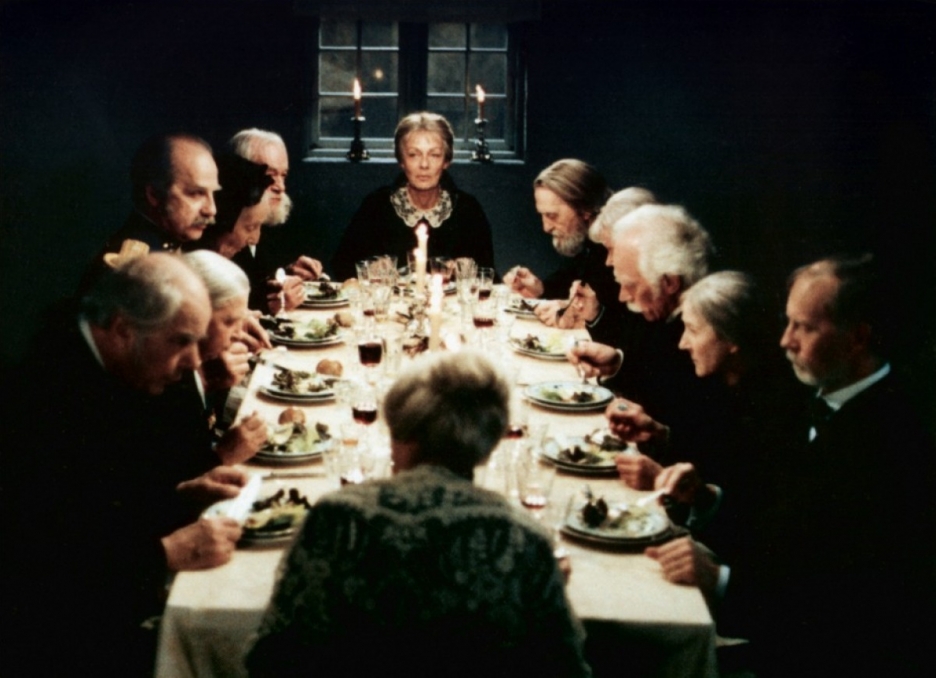
babettes feast_table gatheringYes, isn’t it amazing how communal food can be? Not only that, but there’s something about feasting on our most basic of needs that points to the supplier of those needs. It’s why I believe beautiful tasting food evokes worship (or should). The movie Babette’s Feast provides a poignant story of the power of food to bring people together and the sacrifice of one who caused it to happen. A great reminder of the communion that Christ’s church receives because of his sacrifice.

This also should raise our sensitivity to those who struggle with having food or lack opportunities to gather around the table with others. If you are fortunate enough to have that on Thanksgiving, enjoy your feast and let it serve as a reminder of our greatest hunger and need for Christ.

“I am the bread of life; whoever comes to me shall not hunger and whoever believes in me shall never thirst.” (John 6:35)

[1] M. Craig Barnes, Pastor as Minor Poet: Texts and Subtexts in the Ministerial Life (Grand Rapids: Eerdmans Publishing, 2009), 32-33

Reflections on ETS, Representation and the Face of Evangelicalism

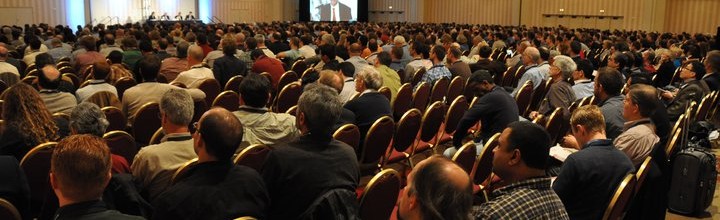
ETS bigcrowdI just came back from the 2013 annual meeting of the Evangelical Theological Society (ETS). If you are not familiar with this organization, ETS is a professional, academic society of Biblical scholars, teachers, pastors, students, and others involved in evangelical scholarship. In short, it is representative of the conservative arm of Christianity affirmed by members acceptance of the Chicago Statement of Inerrancy as criteria for membership.

The meetings are centered on a particular theme, which changes from year to year and hundreds of papers are presented mainly from professors, PhD students and some who serve in as pastors or in a professional capacity. I was specifically interested in gleaning information that would be useful for my thesis but I’m also interested in research on a variety of topics that are relevant to the church and Christian commitment. I also enjoyed the camaraderie with fellow students, professors, and new friends. Good conversations were well worth the trip.

In all fairness, this was my first annual meeting. I’ve been a member for a few years and have attended the regional meetings, which pale in comparison to this behemoth of a meeting. But it didn’t take long to observe that the overwhelmingly, the majority of the 2,000+ members in attendance are white, male. To be sure, the main panel was homogeneous in this regard.  Best of my knowledge, that is how its always been. Now, I don’t say that to make this an issue of race but of representation.  I don’t know exactly what the percentage of minorities was and certainly there was but in comparison to the whole gathering, its pretty small.

Women made up an even smaller percentage of those represented. According to one session I attended on the future of women in ETS, the presenter noted that women comprise 7% of membership and 1% of papers presented. The percentage is even smaller for women of color. Yikes! That’s pretty low considering that over half of the church comprises women. Continue reading