 I can’t harp enough on how important it is to understand the relationship of the Old Testament to the New Testament. When we don’t make proper connections, this impacts how we understand the events of the Old Testament apply to us. In a way, I suppose this post is a follow up to You Can’t Read the Bible Any Way You Want.
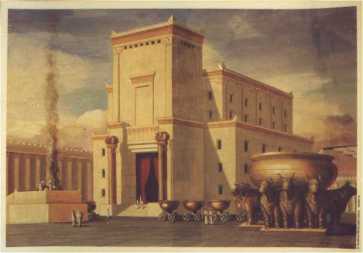
One such way is when Christians pursue the “shekinah glory” remiscent of how the glory filled the temple in the Old Testament. I spent many years in church circles where this was a common occurrence, especially at special conference type of events. The thrust of pursuit was worshipping hard enough so that that “atmosphere” was charged and that glory can fill the physical space.
I recently started reading Kingdom Come: The Amillennial Alternative, by Sam Storms. I purchased the book because of my shifting views on eschatology (end times) and seeing more and more, especially in context of Revelation, how biblical prophecy points more to what is accomplished in Christ than literal, physical interpretation of events. But I have another post on that! So this post is not necessarily about eschatology but about how we understand the relationship of the Old Testament to the New Testament.
I really appreciate Storm’s straight forward easy style of writing. In his first chapter, he appropriately lays the foundation that Jesus is the center of the Old Testament. Specific to the glory of the temple he explains what the shekinah glory in the OT means for the NT; Continue reading
 Recently, I’ve been a bit unsettled over some observations. I’ve heard a few different stories, all revolving around seminary graduates. There were the stories of newly installed pastors, who after going through a rigorous “calling” process involving strenuous scrutiny, presented themselves and their beliefs as something different than in that process. Then there’s the pastor who proclaimed heresy in front of the congregation despite earning top grades in seminary on that same topic. And I see with an uncomfortable frequency, espousal of ideas that veer towards syncretism of Christianity and some contradictory worldview (like new age ideas) or endorsement of teachers who do the same.
 Over at The Gospel Coalition, Erik Raymond wrote how the cessationist position concerning gifts often receives the rebuttal, aptly titled for his piece,
  Well, I guess I wouldn’t be fulfilling my “obligation” as a blogger if I didn’t cite the top 5 posts of 2014. Thanks to WordPress for doing the legwork because otherwise, I don’t think I would make the effort to figure out the most popular posts. Honestly, a couple of these surprised me and here they are;
 TheoThoughts