The Great Commission, Great Commandment, and our Humanity

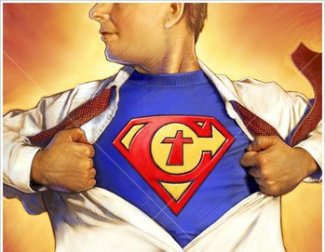
Super ChristianAfter hearing a sermon on the Great Commission this past Sunday, it reminded me of these quotes from two books I’m reading and reinforced that being a witness does not require us to be super Christians, with big capes like we have it all together. You ever feel like you don’t measure up to be an effective witness for Christ, loving God and neighbor as you should? Well neither did the first disciples. And they were with Jesus!

“Matthew concludes his gospel with the Great Commission. To his worshipping, yet doubting, disciples, Jesus says, “All authority in heaven and on earth has been given to me. Therefore, go and make disciples” (vv. 18-19). The one who has all authority has chosen not to use it himself. The one who has all power has chosen to give it away. The one who has just conquered sin, death, and the grave has turned over the next stage of the kingdom to this group of fearful and doubting followers, who have demonstrated over and over again that they are more concerned about themselves than about Jesus, about their agendas than about the kingdom, about their reputations than about ‘the least of these,’ and about greatness than about servanthood. Yet it is to these men that Jesus gives the responsibility to make disciples. The gospel is entrusted to them. The mission of the church is given to them. The fate of the poor, the needy, and the oppressed is delegated to those followers who, even in the presence of the resurrected Jesus, continue to doubt. And that continues to be God’s plan. It is through the church that the kingdom grows and spreads over the earth.”  – Glenn Kreider, God With Us: Exploring God’s Personal Interactions with His People throughout the Bible. Continue reading
Christmas, Jesus and the ‘Other’

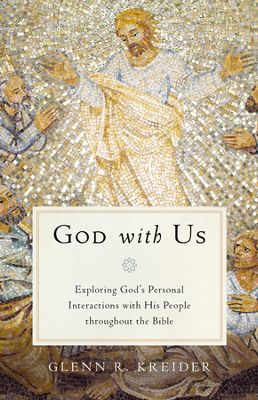
Kreider_God with us coverMy seminary professor, thesis advisor and friend has written a compelling book, recently released in time for this Advent season. In God With Us: Exploring God’s Personal Interactions with His People throughout the Bible, Dr. Kreider traces the biblical story of God’s intentional interaction with this creation through his self-revelation that demonstrates his care, concern and particularly outreach to those who seem the most unlikely to be recipients of his blessings. I plan on doing a full review of the book both on this sites and others I contribute to. But for the time being I thought it appropriate to highlight how this theme comes through in chapter 6, “The Everlasting Incarnation of the Eternal Son” that recounts the story of Jesus’ birth and is quite the timely read for the Advent season.

Dr. Kreider points out throughout the book, and in chapter 6 especially, how God reached out to those who seemed to be beyond the acceptable crowd. He notes in the genealogy;

The ordinariness of his [Jesus’] family tree is made clear, particularly in Matthew’s genealogy. Rather than ignoring the disreputable characters in Jesus’ heritage, Matthew names them…When Matthew names characters, those familiar with their stories remember the shameful details. Perhaps more importantly, we remember that in all of these stories, God shows his grace and mercy to people who are outside the community of faith. These sinners who receive divine grace make it into the community of faith. These women are part of Jesus’ family. The child comes from a long line of unlovely people. When he comes to earth, when he becomes human, he identifies with these outcasts in order to save those who are like them (see Heb. 2) (115-6)

He recounts the story of Jesus’ birth, familiar to so many but provides a fuller dimension than your typical Christmas pageant version and goes beyond the unsavory circumstances of Mary’s pregnancy. The announcement to the shepherds is really compelling considering who they were;

These shepherds were not the well-groomed, clean, mannerly men and women who appear in church Christmas pageants today. First century shepherds were dirty; they spent their time outside, in all kinds of weather, taking care of sheep. They were ceremonially unclean; caring for animals, they dealt with injuries, illnesses, and other matters related to animal husbandry…Like the magi–although at the opposite end of the socioeconomic spectrum–the shepherds were outsiders in Israel. The gospel is good news for outsiders and the disenfranchised, and on the day of Jesus’ birth this good news is announced to a representative group of this kind of people. (123)

Continue reading

Meaty Teachers, Gospel Reachers

teacher_small groupI’ve been going through the book of Hebrews and it never ceases to amaze me with each reading, some new insight is gained (why repeated reading of the word is a lifetime exercise). So here’s something that struck me recently and was kind of enforced in our Sunday School class where we are going through the book of Galatians.

The writer of Hebrews exhorts Christians who were Jews and wanted to return to life under the law of Moses because Christian life was so challenging. He issues a series of warnings regarding those who shrink back and don’t mature in their Christian life.

About this we have much to say, and it is hard to explain, since you have become dull of hearing. For though by this time you ought to be teachers, you need someone to teach you again the basic principles of the oracles of God. You need milk, not solid food, for everyone who lives on milk is unskilled in the word of righteousness, since he is a child. But solid food if for the mature, for those who have their powers of discernment trained by constant practice to distinguish good and evil. (Heb. 5:11-14)

A few observations: 1) There are basic principles of Christianity to be believed that these people have heard repeatedly; 2) moving from milk to meat having the basics so down pact that you can teach others and 3) this is intrinsically related to putting the word into practice such that the basics are lived out.  And here is where I think a careful distinction should be made. Continue reading

Don’t Make Easter Like a Resurrection Birthday

empty tombOn Easter, we Christians celebrate the resurrection of Christ and rightly so. Not only is this monumental event the distinguishing mark of Christianity, but it is the one that assures us forgiveness of sins and hope for the future, including the bodily resurrection. Go to any church service and the on the tip of many lips is “He is risen!…he is risen indeed!” We are awash with this glorious event.

A funny thing happens after Easter though. The resurrection gets a back seat to the cross.  Now don’t misunderstand, the cross is significant, too.  This is where Jesus propitiated the sins that were held against us.

And you, who were dead in your trespasses and the uncircumcision of your flesh, God made alive together with him, having forgiven us all our trespasses, by cancelling a record of debt that stood against us with its legal demands. This he set aside, nailing it to the cross.” (Col. 2:13-14)

His atoning sacrifice provided payment of sins in one transaction for sin of all times. It is all sufficient to cover all our transgressions. (Heb 10:10-13).  Those in Christ stand in no condemnation before God because of what was because of what God did through the Son, what the law was powerless to do (Rom 8:1-4). Continue reading

They Were Not Rejoicing

passion of Christ_mary cryingAs Christians around the world celebrate Good Friday today, we celebrate the transaction on the cross where Jesus atoned for the sins of lost people. While we have the immense benefit of recognizing what this day meant, if we were to transport ourselves back in time, there was nothing to celebrate on that day at all.

In his book Surprised by Hope, N.T. Wright says it well;

And it shows, of course, that the crucifixion of Jesus was the end of all their hopes. Nobody dreamed of saying, ‘Oh that’s all right – he’ll be back again in a few days. Nor did anybody say, ‘Well, at least he’s now in heaven with God.” They were not looking for that sort of kingdom. After all, Jesus himself had taught them to pray that God’s kingdom would come ‘on earth as it is in heaven.’ What they said – and again this was the ring of first century truth – was ‘We had hoped that he was the one who would redeem Israel (Luke 24:21), with the implication, ‘but they crucified him, so he can’t have been.’ The cross, we note, already had a symbolic meaning throughout the Roman world, long before it had a new one for the Christians. It meant: we Romans run this place, and if you get in our way, we’ll obliterate you – and do it pretty nastily too. Crucifixion meant that the kingdom hadn’t come, not that it had. Crucifixion of a would-be Messiah meant that he wasn’t the Messiah, not that he was. When Jesus was crucified, every single disciple knew what it meant: we backed the wrong horse. The game is over. Whatever their expectations, and however Jesus had been trying to redefine those expectations, as far as they were concerned hope had crumbled into ashes, They knew they were lucky to escape with their lives. (39-40)

Imagine the grief and hopelessness of the situation. Is it any wonder that they were huddled inside, when the news came?  To be continued…