 While I have categorized my position on gender roles as complementarian, I have wrestled with some ways in which it has been defined. One of my primary issues involves the distinctive roles between men and women, that I consider to be exaggerated or forced. Not only does this create more restrictions than I think is warranted in Scripture, but promotes some less than healthy attitudes. We can’t just look at 1 Timothy 2 and call it a day, especially considering that Paul was addressing a specific context. That has to be measured against the breadth of scripture. So while there is warrant for male headship in the church (which I translate as governing leadership) and home, beyond that I don’t see such as sharp distinction that traditional complementarianism has painted.
Wendy Alsup published a post that describes a new wave of complementarianism. I first came across Wendy’s writings at the Gospel Coalition and loved her treatment of Genesis 3:16. She’s obviously conservative (PCA) and complementarian but strives for a balanced and thoughtful consideration of how genders truly complement each other. Her post on a new wave of complementarianism resonated so well with me because it is the canonical picture that I see in scripture regarding male headship and the complementary aspects of gender in kingdom representation. She profiles 8 characteristics;
1) Belief in the trustworthiness of Scripture. These women (and a few men I know as well who’ve talked about this subject), love the Word and study it hard. They read, they study, and they listen. And they do it all from the foundation that the Bible is God’s written Word, handed down through the Holy Spirit and preserved by God for the instruction of His children.
2) Belief that the Bible interprets itself. The Bible is the best commentary on itself and gives us a great deal of information that, when coupled with common sense interpretive principles (like the fact that story is different from instruction), leads to much more clarity on issues of gender in the Church than some claim.
3) Respect for Church history and the Creeds. Which leads to number 4. Continue reading
 One of the books that we are critically reading through in my systematic theology colloquium class is Classic Christianity [Thomas Oden (2009) New York: Harper One Publishing] In the introductory section of Book 3 – Life in the Spirit, he takes a blow at modern revisions that want to eliminate masculine language in reference to God.
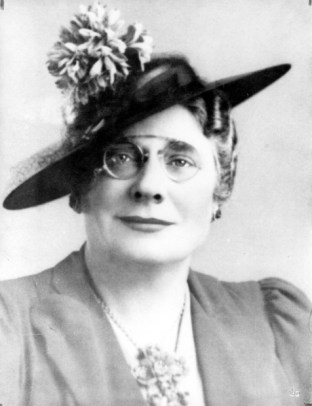 I came across the name Henrietta Mears (1890-1963) several years ago when thumbing through her book What the Bible is All About as I waited for a prescription to be filled. Since that time, I have been fascinated by her. She was a Christian educator and influenced the likes of Bill Bright and Billy Graham. She was definitely complementarian, but smashed the idea that women were only suited for roles of support to their husbands and children. Never married, she dedicated herself to the task of teaching the word of God, holistically, purely and simply and the development of quality resources to accomplish the task, including teacher training and development. Talbot School of Theology did
  TheoThoughts