 Over at The Gospel Coalition, Erik Raymond wrote how the cessationist position concerning gifts often receives the rebuttal, aptly titled for his piece, Don’t Put God in a Box. By cessationism, he means that the operation of certain gifts as normative practice have ceased. Since he uses the word normative, I can’t tell whether he means it can’t happen at all or rather there is no need for God to move this way in general today. I think this is an important clarification since the cessationist position often gets interpreted as not believing in miracles. Though there are some cessationist who take the position, I think it safe to say they are in a small minority. The rest of us would contend that God can work as he pleases but does he really need to on a regular basis?
Nevertheless, this gets to the thrust what interested me about Raymond’s piece that I want to connect to a couple of other areas in which some say God must move. He rightly asserts that the God in a box argument is actually limited because it restricts movement of God to extraordinary events instead of seeing the whole of what God does in his divine Providence.
Now we see the issue clearly. It is not so much the gifts as the activity of God. We also see something of the reflex of 21st Century, particularly Western Evangelicalism. The thought is that the evidence of God working in the world is the miraculous. God shows up and we all know it. We know God is working when tragedy is averted, disease is healed, life is spared, and the occurrence of personal experiences that cannot be explained.
But, what if God’s work is far more than this? What if his activity in the world is not limited to our perception of the miraculous? What if God’s activity in the world is less like Superman—rushing in to ‘save the day’ and then rushing out before he is spotted—and more like Atlas—holding the weight of the world on his shoulders? What if God is not actor in the story of our life but that we are in his story? What if God is the writer, director, producer, main character, and set designer?
The doctrine of Providence helps us here. Providence is God’s infinite power that upholds and governs all things that come to pass. As the Heidelberg Catechism says,
“God’s providence is his almighty and ever present power, whereby as with his hand, he still upholds heaven and earth and all creatures and so governs them so that: leaf and blade, rain and drought, fruitful and barren years, food and drink, health and sickness, riches and poverty, indeed all things, come to us not by change but by his fatherly hand.”
The main things you need to know about this is that God is not disconnected from what is happening in the world today. God is upholding, governing, and ordering all things as with his very hand.
 I have often thought that eschatology, the doctrine of the end times, gets treated as a tag-on to Christian theology. In other words, it is possible to treat how we view the end as something additional to what we would consider the primary basis of Christianity.
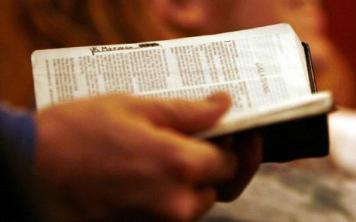 Now, a lot of this really resonated with me since I’ve written similar prescriptions of why we might find Bible reading boring. Anyone who has followed this blog for any amount of time knows my passion for believers being serious about Bible reading and comprehension. In fact, I would expand on his 2nd point about the Bible being too hard in that Christians really need a framework to understand how the 66 books fit together as God’s complete story of redemption. When I consider my own trajectory in Bible reading, my comprehension of the holistic Christ-centered nature of Scripture has evolved and is evolving over time because of the direction of others. But especially because of how it is emphasized in the preaching and teaching of the Word at my church. Over the past decade, I have been increasingly exposed to preaching that considers the holistic nature of Scripture not just cherry picked verses to support whatever instruction the preacher wants to provide so that I do x, y and z.
  I confess I’ve not studied a lot on Islam. But these days am investing more time to understand for reasons I’ll get to in the post. Islam seems to be gaining more of a presence, not just globally, but locally as well. To be sure, there are growing concerns and quite amount of fear lingering in Christian circles because of the rise of ISIS and other attacks perpetrated under the name of Islam. I’ve observed that this fear has caused strong reactions among Christians against Muslims and the desire to repel them from out midst.
 Concerns are valid but I question if our fearful reactions aren’t counterproductive to people who are to be salt and light. There is disagreement on whether these extreme groups actually represent authentic Islam. The short answer is yes and no and it depends on who you ask. I’ve been reading through Seeking Allah, Finding Jesus: A Devout Muslim Encounters Christianity. Nabeel Qureshi recounts his journey from Ahmadi Islam to his conversion to Christ, explaining Islam and distinction among groups along the way. I found this excerpt compelling, from his thoughts about what happened after 9-11;
 Let’s face it, we live in a therapeutic culture. Billions of dollars are spent each year on self-help tools, psychologists and other fixes to make hurt go away from our history, mistakes, present realities or future fears.
 TheoThoughts