
The Shame of Shame: Wielding the Sword of Defense

shame_facepalmShame. What comes to your mind when mentioning that word? It’s a word that needs no definition for all of us have experienced it in varying degrees. Inadequacies, deficiencies, past and present failures…all bring that curtain of shame down on us. The problem, I think, is that when it strikes, instead of identifying it appropriate to what it is, we ride the wave of where it takes us.

I’ve been learning a lot about this dreaded animal over the past year or so. Not so much that it exists but the insidious behavior it encourages and has encouraged in my own life over many years. On one hand, there are those that accept it and go along with whatever behavior says it deserves. If you’re inadequate you might as well live like it.

Well, the problem with that for Christians is obvious. We are called to be holy and live according to our position in Christ (1 Peter 1:15-16; Ephesians 4:1). Although, living out shame can explain a lot concerning the presence and pull of sinful, addictive behavior. But any amount of time reading the bible, in prayer or fellowship with brothers and sisters will propel the need to live right and be a “good Christian”.

I personally believe that in our humanity, we are hard wired to earn our righteousness through moralism. It’s why the common response to acceptability to God is “I’m a good person”. The good is a reflection of the perfection that God requires. So good should be good enough. On the contrary, behavior that misses the mark is seen as not deserving any connection to or pardon from God . All this points to one thing: we want perfection. Because in perfection is beauty, goodness and acceptability. Continue reading

The Problem of Evil: Why We Need a Good Theology of Bad

newton ct imagesSadness. Grief. Shock. Horror. Questioning…lots of questioning regarding this recent tragedy that has severely impacted the lives of 26 families who must cope of the aftermath of loss and unspeakable violence. Sheer evil, actually. Even countless more are impacted: the responders, the survivors and their families and anyone else who got close enough to this tragedy to feel it’s penetrating arm.

The question of evil is most obviously on the minds of many. Christians have responded and some responses have been…troubling.

  • We’ve taken God out of the schools
  • Evil spirits at work
  • Video games
  • Gun control
  • Poor parenting

The commonality in all these responses is that there is something outside of oneself to blame. These responses are inadequate. Because they dismiss the very real presence of sin that resides within humanity. This sin and evil that entered the world through one man’s disobedience has impacted us all and subjected humanity to death, disease, dysfunction and delirium. (Romans 5:12; 8:18-22). There is something within, that when facilitated by aggravating factors, like mental illness result in horrific atrocities. But as long as the external factors are blamed, the root cause is overlooked. Jesus himself said

Listen to me, all of you and understand: there is nothing outside the man which can defile him if it goes into him; but the things which proceed out of the man are what defile the man (Mark 7:14-15)

See also the compatible passage in Matthew 10:10-20. And specifically vs 19 – “for out of the heart come evil thoughts, murders, adulteries, fornications, thefts, false witness, slanders.”

So we need a good theology of bad because unfortunately bad is with us. The problem of evil will persist until Jesus comes back and fixes everything. Until then, his kingdom breaks through in various ways in the midst of pain and suffering. We’ll celebrate that in a couple of weeks and marvel at the incarnation and the promise of redemption through God the Son, Immanuel God with us. He provides light, hope and comfort though not eradicating the presence of evil.  Until evil is eradicated with his glorious appearance, we wait and hope and trust though trying to make sense of it all. These are the unfortunate tensions of living in the already-but-not yet kingdom realities. For there remains grief, heartache and questions. .

Here are a few good articles I’ve come across.

An Insufficient Answer to the Shootings in Connecticut

Any Person is Capable of Any Sin

If God is Invited in, All is Well?

Continue to pray for the families of this tragedy.

Advent Reflection: When God Doesn’t Fix It

NativitySceneSermon today was on Luke 1:26-33, where the angel appears to Mary regarding the announcement of Jesus’ birth. I was particularly struck by this section of it;

And behold, you will conceive in your womb and bear a son, and you shall name him Jesus. He will be great and will be called Son of the Most High; and the Lord God will give him the throne of his father David; and he will reign over the house of Jacob forever and his kingdom will have no end. (Luke 1:31-33).

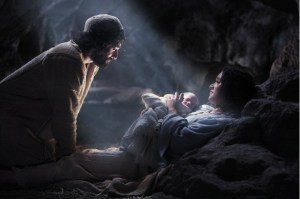
This is what the prophets foretold, was it not? That the messiah would come and fix everything. Why? Israel had been in chaos then settled back into a Gentile run land, with no king and fading hope. But YET, here was the hope, the promised one, the eternal king who would reign forever. Hope had arrived in a manger.

And this is what the apostles were eager to see just before Jesus’ ascension, wasn’t it? He came down from heaven, revealed the fulness of the Godhead, put a permanent stamp on God’s eternal promises and set forth a new paradigm. He spoke of the new covenant through his blood and the promise of the Holy Spirit. They saw him die a brutal death but walk with him after his resurrection. But they just had to know, “Lord, is it at this time, you are restoring the kingdom to Israel?” Why did they have to ask that? The answer is obvious. The king had come and it was a new day, filled with new things for God’s people. But something still wasn’t fixed. Continue reading

Sex and the New Jerusalem City

Multicultural gatheringMy friend Damian and I had a recent email exchange regarding preaching tendencies related to the contemporary evangelical culture. This comes with a philosophy that we need to be so relatable that it ends up obscuring God’s overall redemptive program. He talked about this one class in his seminary program in which discussions of Song of Solomon which resulted in placing a good dose of emphasis on human sexuality. With his permission, I’m posting his full response:
 I am firmly convinced of the allegorical interpretation of the text as God’s love, expressed in anthropomorphic terms, for His people. Karl Barth’s idea, echoed by John Paul II – that sexual differentiation is the defining feature of our humanness, the key that unlocks the door to human identity – seems to have conquered the day in modern evangelicalism . But I would challenge this thesis: If Christ is truly the fullness and definition of authentic humanity, we must say that marriage, sex, and parenthood tell us nothing whatsoever of ultimate significance about humanness since Christ did not participate in any of these.

There appears to be an obsession in modernity, swallowed hook, line, and sinker, by the evangelical church, that by analyzing our own sexuality, we believe we will finally discover the deep secret truth of our humanness. To borrow from Foucault, he claims that we are obsessed not with sex itself (as a physical act), but with “the truth of sex” – with the idea that sex is a revelation of truth. Thus we form sexual sub-cultures; we worry about the ever-more-precise definition of all our sexual habits and preferences; we constantly think about our sexuality; we write about it incessantly; we “confess” our sexual secrets and peculiarities; we have never been fully honest about ourselves until we have given utterance to our sexuality. (A fascinating example of this is the way biographers assume that the sexual life of their subjects will disclose the deep secret truth about who they “really” are.) Continue reading

An Advent Reflection: God’s Perfect Timing

NativitySceneOne thing I’ve come to embrace in my Christian journey is the value of tradition. Having spent my earlier Christian years in separatist and fundamentalistic circles, then later in Charismatic circles there was this common rejection of tradition on various levels. Well tradition is important because it grounds us in something sure. It creates a continuity with the past and gives support to what the church has always believed. The more the past is rejected in favor of something new, the more likely we are to get things askew.

And what greater time to reflect on the Christian faith than the beginning of the advent season. The intersection of deity and humanity, in the form of the incarnation. The promised king, the awaited messiah, the one the prophets proclaimed who would rescue and redeem.

But I also consider the setting and timing. Israel waited so long it seemed like hope would have dimmed. Under Roman rule, the relinquishment of their land to Gentile authority, the loss of a reigning king and the only relief in found in temple teaching and law obedience. Was this the way it was supposed to go? I bet many asked this question. Where was the deliverer who would set everything right and re-establish promises that have faded in the backdrop of waiting? Continue reading