 I was cleaning out some old email and came across this letter to subscribers from Greg Koukl, Stand to Reason Ministries. He makes a good case for black letter Bibles, that is NOT having Jesus’ words in red letters. But the stronger case is for considering how God spoke through all Scripture. Here’s what Koukl says;
“Twice recently I’ve noticed people making a theological point based on what Jesus, allegedly, did not say. In both instances I have the same questions: So what? Why should it matter what Jesus did not say?
I have three points in mind with these questions. They have to do with a tactical maneuver, a misstep in thinking, and a misunderstanding about the Bible that so-called “red letter” Christians seem to fall into.
First, notice the tactic being employed here: appeal to authority. The person making the comment is trying to bolster her point of view by enlisting Jesus as her ally, as a person whose views must be reckoned with.
Now, on this point I completely agree. What’s odd, though, is that this appeal is often made by people who seem completely unconcerned with Jesus’ opinion until it appears He sides with them. This looks suspiciously like special pleading. If, for example, Jesus had condemned the behavior in question, would that make a differenceto the challenger? If not, then why bring Jesus into the discussion at all?
So, first I want to point out that if Jesus’ opinion on any one issue matters, maybe we should take His counsel on other things for the same reason.
For example, even if we have no record of Jesus’ thoughts on, say homosexuality, did He weigh in on the closely related issue of marriage? He did, it turns out: From the beginning, God designed, endorsed, and intended marriage and sex (“one flesh”) solely for long term, monogamous, heterosexual unions (Matt. 19:4-5). Shouldn’t this teaching of Jesus’ have a legitimate bearing on the debate, if His opinion really matters? Continue reading
 Let’s face it. We live in a narcissistic, selfie-absorbed culture. It’s all about me – my thoughts, my dreams, my fulfillment, etc. However, Christians operate under a different paradigm. We are not our own; we’ve been brought with a price. I confess that whenever I see someone who claims Christianity also adopt an “I love me” attitude, I question if they really understand what Christianity is all about.
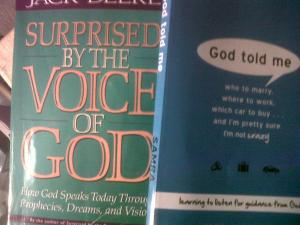 If you’ve been following this blog for some time, you know that I recently graduated from Dallas Seminary with a ThM Degree. However, graduation was delayed due to delays in my thesis completion and approval. Despite the struggles, it was worth the endeavor because I wrote on a topic that I believe deserves addressing in our contemporary evangelical environment. The title of the thesis is “God Already Spoke: A Response to Extra-Scriptural Divine Speech.” I interact with three books that encourage hearing the voice of God outside of Scripture. These books are Surprised by the Voice of God by Jack Deere, God Told Me by Jim Samra and Jesus Calling by Sarah Young. I refute the premise these authors promote that God needs to tell us more about himself or his requirements for us than what has already been communicated through Scripture.
 Well, if you are a Christian and reading this I think you know where I’m going with this analogy. If you are committed to a particular church model/structure/paradigm, we might find that there are those practices that are out of step with Scriptural faithfulness. When I consider my very eclectic doctrinal journey through varying church paradigms, I confess to having a two-fold reaction. On one hand, I cringe at some of the stuff I’ve been exposed to and foundation for abusive tendencies. On the other hand, through that journey, I’ve been privileged with the example of so many who sincerely love the Lord and want the best for His church, even if I thought the methods were not supported by Scripture.
 I often hear this distinction being made typically by conservative Christians, God-centered vs. man-centered. Whenever I see it articulated, I get the sense that it is often communicated to distinguish between Christian faith and practice that is shaped based on the desires of man vs. what God wants and has communicated to us.
 TheoThoughts